Preventing Leakage: The Critical Role of Heat Seal Lacquer in Aluminum Capsules


Last Updated on 18 December, 2025 by Luca
Table of Contents
Introduction: The High Cost of Sealing Failure
In the competitive landscape of coffee co-packing, coffee capsule sealing issues are the primary cause of product recalls and brand damage. A “leaker” is not just a defective unit; it is a liability. Whether it is an immediate seal burst during the 19-bar extraction or a slow oxygen leak that stales the coffee, the culprit is rarely the aluminum itself—it is the Heat Seal Lacquer (HSL). This guide delves into the thermodynamics, polymer chemistry, and machine parameters required to achieve a hermetic seal, providing a technical roadmap for B2B buyers who cannot afford to compromise on quality.
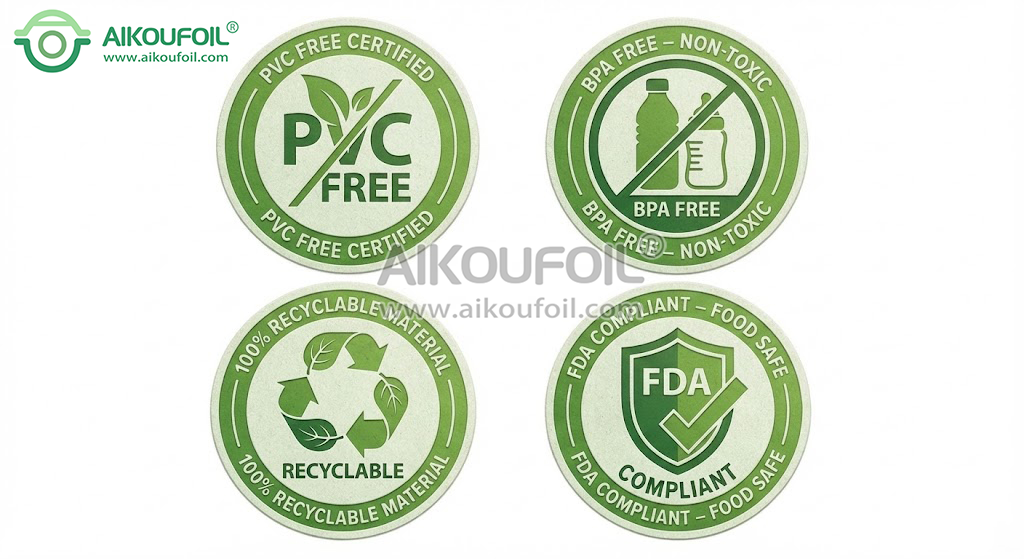
1. Compliance Strategy: 100% PVC-Free & BPA-Free
Modern retailers (such as Costco, Lidl, and Aldi) are tightening their packaging standards. Old-school Vinyl-based lacquers are being banned due to environmental toxins. Our heat seal lacquer aluminum capsules utilize a strictly certified Modified Polypropylene (PP) Dispersion system.
- Zero Bisphenol-A (BPA-Free): Guaranteed safe for endocrine health and compliant with EU Food Contact regulations.
- Zero Polyvinyl Chloride (PVC-Free): Ensures clean incineration during the aluminum recycling process, preventing dioxin formation.
- Retort-Grade Stability: Unlike standard lacquers that degrade, our matrix maintains flexibility for 24 months, ensuring the lid peels or bursts cleanly without shattering.
2. Inclusion Sealing: The “Caulkability” Factor
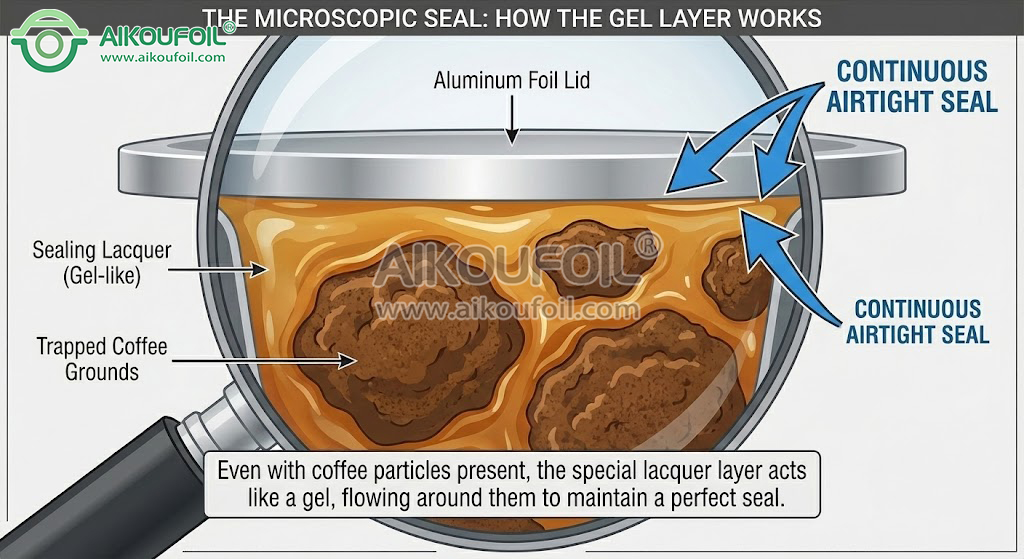
No matter how clean your filling line is, coffee dust will eventually settle on the capsule rim. Generic lacquers fail instantly when contaminated, creating microscopic air channels. Our HSL is engineered with high Caulkability—the rheological ability to flow around particles.
- 150 Micron Tolerance: Lab tests confirm our seal integrity holds even with coffee grounds up to 150 microns trapped in the seal area.
- Polymer Encapsulation: When activated, the lacquer matrix softens sufficiently to encapsulate the dust particle completely, preventing it from breaking the hermetic barrier. This directly improves your OEE by reducing machine downtime for rim cleaning.
3. Thermodynamics: Matching Linear vs. Rotary Machines
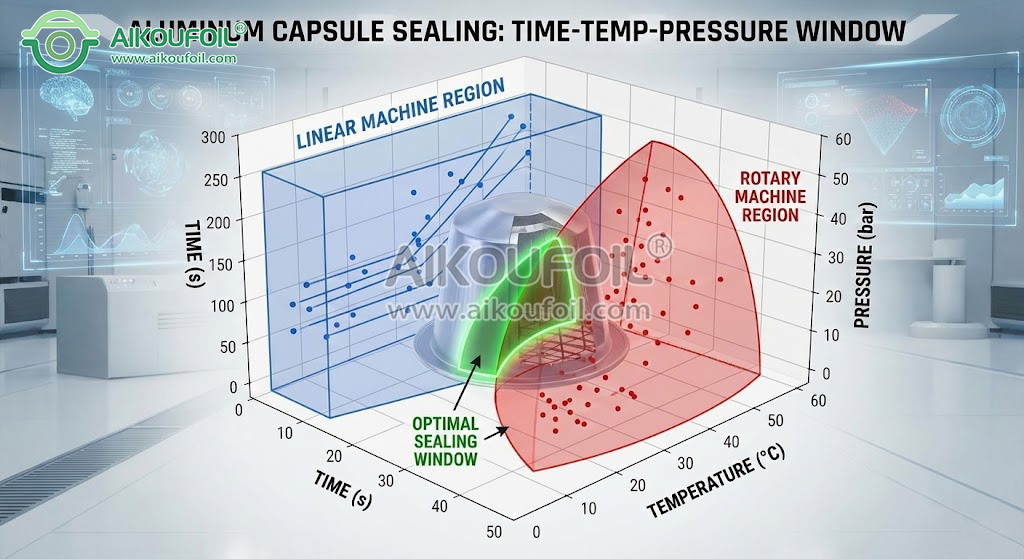
Capsule lids sealing requires precise temperature management. One lacquer formulation does not fit all machinery types. We offer specific series based on your equipment’s Dwell Time (contact time).
- Series R (Rotary High-Speed): Engineered for Opem/Spreafico/IMA. Activates in 0.2-0.4 seconds at 220°C. Contains anti-blocking additives to prevent sticking to Teflon heads during rapid cycling.
- Series L (Linear/Manual): Designed for machines with dwell times >1.0 second. Formulated with high thermal stability to prevent carbonization or “pin-holing” caused by prolonged heat exposure.
4. Nitrogen Flushing: The “Hot Tack” Necessity
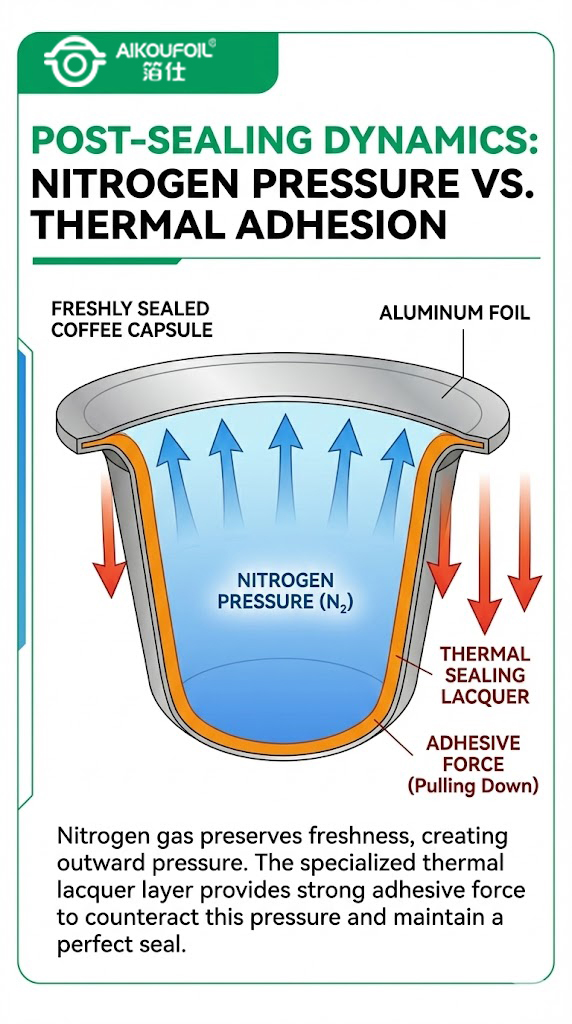
New Hardcore Section Fresh coffee releases CO2, and nitrogen flushing creates internal positive pressure. This pressure tries to push the lid off while the seal is still hot and soft.
- Hot Tack >3N: Our lacquer is engineered to develop immediate Hot Tack strength (>3 Newtons) while still in a molten state.
- Preventing Creep Leaks: This property holds the lid firmly against the internal gas pressure during the critical few seconds of cooling, preventing “creep leaks” or “channeling” that destroys shelf life.
5. Design Freedom: Seal-Over-Print Technology
Marketing teams often demand full-rim printing for brand differentiation, but ink interferes with sealing. Standard lacquers delaminate when applied over ink.
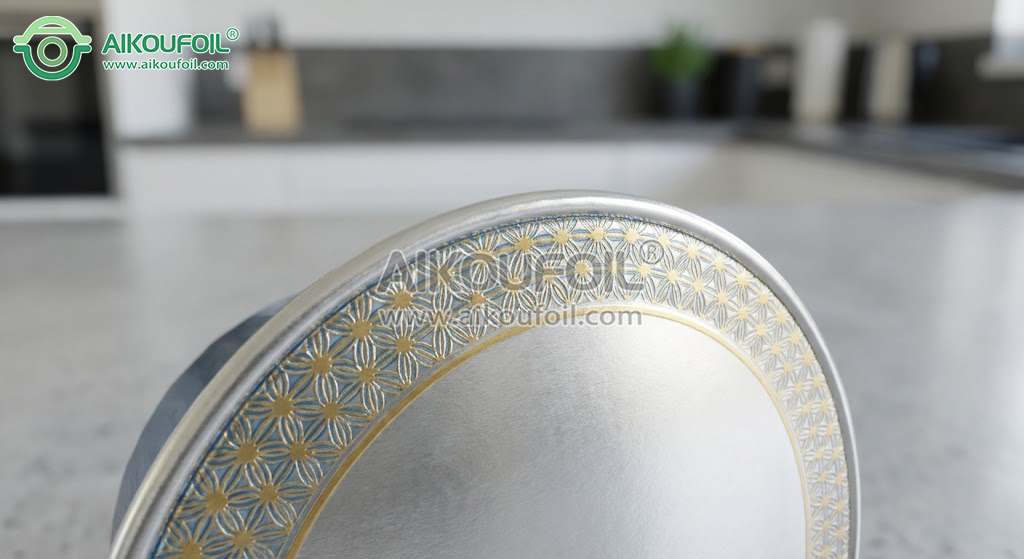
- Ink-Compatible Primer: We use a proprietary primer layer that allows our HSL to bond directly onto printed rims.
- Cross-Link Adhesion: We guarantee a seal strength of >7N even on printed areas. This ensures your “Limited Edition” designs with colorful rims are as safe and secure as your standard black capsules.
6. Statistical Reliability: Cpk and Aging Stability
A supplier claiming “good sealing” is useless without data. We speak the language of Sigma and long-term stability.
- Cpk Guarantee: We maintain a Process Capability Index (Cpk) of >1.33 for seal strength, meaning defective seals (<6N) are statistically insignificant.
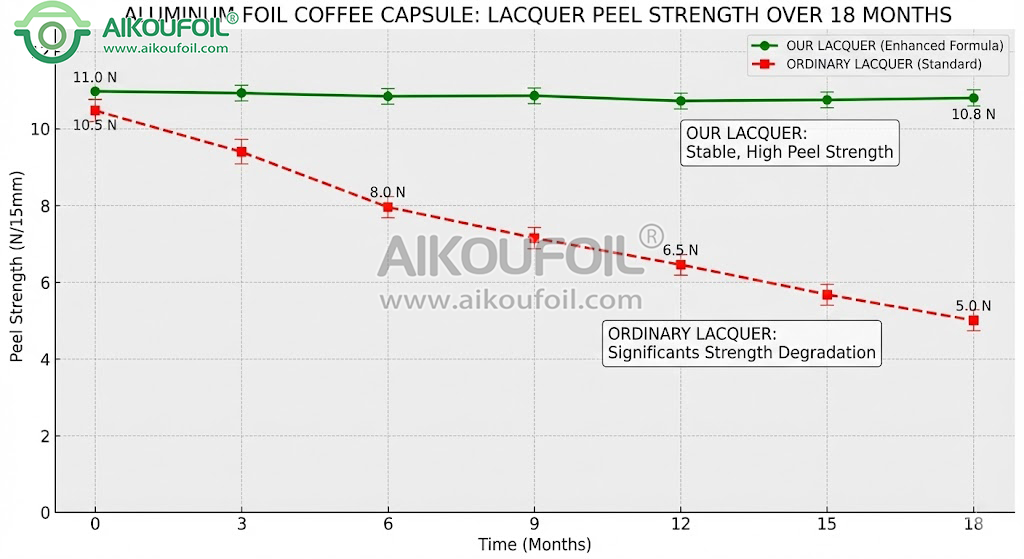
- Aging Stability: Cheap lacquers oxidize and become brittle after 6 months. Our accelerated aging tests (ASTM F1980) prove that our lacquer maintains 95% of its peel strength even after 18 months of simulated storage, ensuring no “brittle peel” issues for the consumer.
Conclusion: The Seal is Your Brand’s Insurance
Whether you are running a high-speed Spreafico line or a manual filler, the chemistry of your lacquer determines your brand’s reputation. Don’t gamble with generic coatings that contain PVC or fail under dust contamination. Choose an engineering partner who understands the thermodynamics of your specific process.
Stop the Leaks Today.
- Consult our Technical Expert: Schedule a 15-minute call to diagnose your current production line sealing issues.
- Request a Lab Analysis: Send us your “leakers,” and we will use our Scanning Electron Microscope (SEM) to find the root cause. (