Aluminum Foil Containers: From the Stadium to the Dining Table — How Foodpanda’s Data Reveals the “Hot & Cold Co-Delivery” Challenge

Last Updated on 10 April, 2026 by Luca
Table of Contents
Introduction
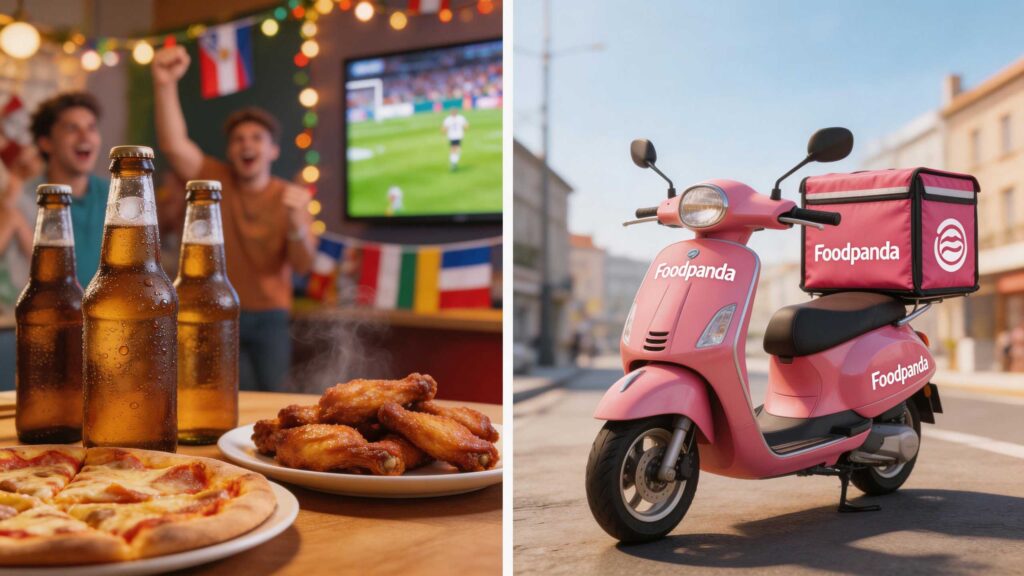
In the high-stakes world of QSR franchising, brand loyalty is built on consistency. For multinational chains like Starbucks or Texas Chicken, the choice of aluminum foil containers has emerged as a critical differentiator in maintaining food quality across borders. According to QYResearch data published in late 2025, the global aluminum foil container market is projected to grow at a CAGR of 5.2% through 2031, driven largely by the shift away from materials that fail under real-world delivery stress. During the 2026 World Cup qualifying rounds, Southeast Asian delivery data revealed a unique consumer habit—ordering ice-cold beer alongside piping hot stir-fry. This “Hot & Cold Co-Delivery” scenario is a nightmare for procurement directors. How do you ensure that fries remain crispy and soups stay scalding after 45 minutes in a delivery bag, especially when plastic containers lose heat rapidly and paper boxes turn into soggy messes? This article explores why aluminum foil containers are the definitive solution to the QSR quality crisis.
The Procurement Director’s Dilemma: Temperature as the Ultimate KPI
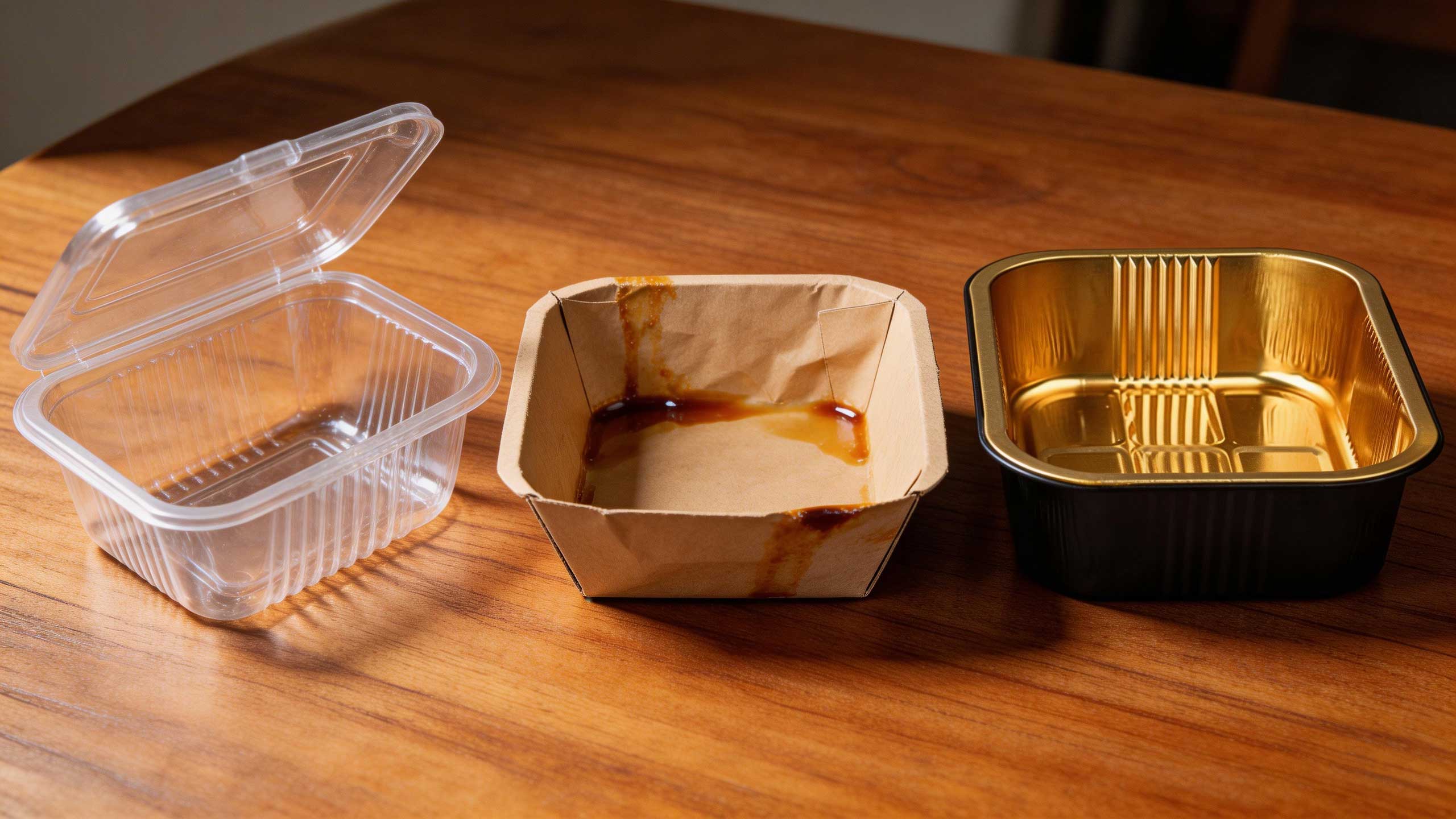
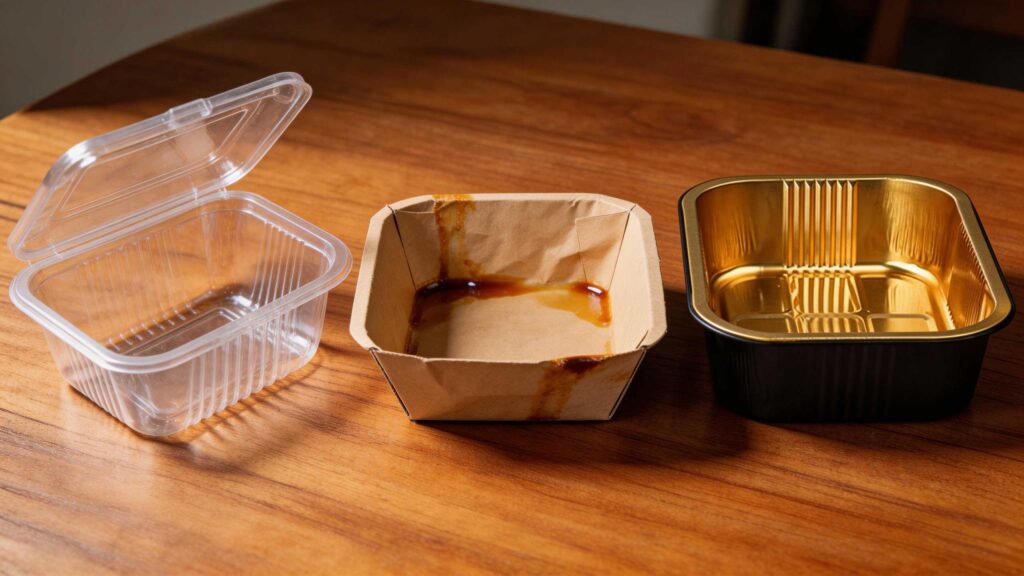
For international restaurant brands, the “unboxing experience” is the final moment of truth. When a consumer rates their delivery experience, the temperature of the food upon arrival accounts for over 60% of their satisfaction perception. Traditional packaging materials create a binary problem. Polypropylene (PP) plastic containers, while cheap, are poor insulators; they allow heat to escape rapidly, and their structure fails under high-temperature grease, leading to warping. Paperboard containers, often marketed as “eco-friendly,” absorb moisture from steam, leading to structural collapse—a phenomenon known as “sogging.” This not only compromises the visual presentation (critical for Instagram-worthy branding) but also signals poor quality to the customer. For procurement heads managing cross-border supply chains, this inconsistency leads to brand dilution and increased customer churn.
Thermal Physics in Action: Why Aluminum Defies the Laws of Delivery
Aluminum foil containers function fundamentally differently than polymers. Aluminum is a conductive material, which is critical for two reasons: rapid reheating and sustained insulation. When a meal is packed immediately after cooking, the aluminum container rapidly absorbs the heat, distributing it evenly across the surface. This “thermal mass” effect creates a stable heat reservoir. Furthermore, when combined with a tight heat-seal aluminum foil lid, the container creates a micro-environment that locks in moisture and heat through convection blockage . According to material specifications from leading manufacturers, food-grade aluminum foil (typically 8011 alloys) can withstand temperatures ranging from -20°C to 250°C without deforming or releasing harmful chemicals . For the QSR operator, this means that a crispy fried chicken remains crispy because the aluminum container wicks away excess steam, while the soup stays hot due to the sealed thermal barrier. Moreover, should a delivery be delayed, the container can be placed directly into a convection oven at 230°C to restore the food to “fresh-out-of-the-kitchen” status—a feat impossible with plastic or paper.These properties make aluminum foil containers the preferred choice for QSR delivery.
Circular Economy & Regulatory Compliance: The PPWR Catalyst
For procurement directors sourcing for European or North American markets, regulatory compliance is no longer just about FDA food contact standards; it is about Extended Producer Responsibility (EPR) and circularity. In December 2025, the European Aluminium Foil Association (EAFA) and Flexible Packaging Europe (FPE) announced the formation of a new European alliance, launching January 1, 2026, specifically aimed at enhancing the recycling performance of small aluminum packaging (such as coffee capsules and semi-rigid containers) . This alliance, which includes major stakeholders like Nestle Nespresso, Lindt, and Amcor, is a direct response to the EU’s Packaging and Packaging Waste Regulation (PPWR). Unlike plastic, which faces downcycling limitations, aluminum boasts a recycling rate that retains its virgin properties. EAFA Executive Director Guido Aufdemkamp stated that the industry must “join forces… to achieve the PPWR targets” . For brands like Texas Chicken or Starbucks, switching to aluminum containers is not just a logistical win; it is a strategic move to future-proof their supply chain against impending environmental taxes and packaging bans.
Customization & Branding: High-Definition Printing on Metal
In the competitive F&B landscape, packaging is the silent salesman. Aluminum containers offer a premium aesthetic that plastic cannot replicate. Unlike polypropylene, which requires labels that can peel off in condensation, aluminum surfaces are compatible with all printing technologies. They can support high-definition printing, embossing, and surface coating . This allows brands to imprint logos, heating instructions, and QR codes directly onto the container without the risk of smudging or peeling. For a cross-border brand, this ensures that even during a live sporting event—where packaging might be photographed for social media—the brand visibility remains pristine. Aikou specializes in such customizations, offering solutions that align with the high-volume, high-quality demands of international chains, ensuring that the packaging reinforces the brand’s premium positioning from the kitchen to the stadium parking lot.
The Aikou Advantage: From Oven to Delivery Bag
At Aikou, we understand that the journey of food doesn’t end at the restaurant counter. Our aluminum foil heat seal containers are engineered for the entire lifecycle of a meal—from preparation to consumption. Our containers are certified to meet FDA and EU food contact standards, ensuring safety across all target markets. We specialize in providing solutions for the specific pain points identified by industry data: the need for dual-ovenability (resistant to both freezing and high-heat convection ovens up to 230°C), the requirement for leak-proof transportation via our heat-seal lidding films, and the demand for sustainable packaging that aligns with global EPR frameworks. By partnering with Aikou, procurement directors can standardize their packaging across multiple countries, reducing supplier complexity while guaranteeing that every meal—whether delivered to a living room in London or a sports bar in Bangkok—meets the brand’s strict temperature and quality benchmarks.
Conclusion: Securing Your Brand’s Reputation, One Meal at a Time
In the era of hyper-convenience, the battle for market share is won or lost on the doorstep of the consumer. The data from Foodpanda and the insights from QYResearch are clear: temperature retention and packaging integrity are non-negotiable for customer retention. The shift away from plastic and paper toward aluminum foil heat seal containers is not merely a trend; it is a strategic imperative driven by regulatory pressure (PPWR), consumer demand for sustainability, and the logistical realities of “Hot & Cold Co-Delivery.” Aikou offers the expertise, customization capabilities, and rigorous quality standards required to navigate this complex landscape. Don’t let your brand’s reputation go cold. Ensure that every delivery, whether it’s a late-night snack or a World Cup feast, arrives with the same quality and freshness as it left the kitchen.
Call to Action: Elevate Your Packaging Strategy Today
Ready to solve the “Hot & Cold Co-Delivery” challenge for your international chain? Aikou is ready to partner with you. Switching to aluminum foil containers directly addresses both operational and sustainability goals.We offer comprehensive support from material selection and custom mold design to high-definition printing and compliance documentation. Request your sample pack today to experience the Aikou difference—where science meets sustainability, and every meal is a promise kept.