How Europe’s 2025 Summer Heatwave Is Reshaping Cold Drink Packaging: Why Aluminum Cups Outperform Plastic in Extreme Heat

Last Updated on 10 April, 2026 by Luca
Table of Contents
Introduction
Aluminum foil cups have emerged as the unexpected hero of the summer 2025 beverage supply chain crisis. As record-breaking heatwaves swept across Europe, a hidden crisis emerged within cold supply chains: traditional plastic and paper cups were failing to protect beverage quality during transport, storage, and last-mile delivery. For beverage brands and restaurant chains, this wasn’t just a logistical headache—it became a direct threat to customer satisfaction, brand reputation, and repeat purchases.
When a customer receives a lukewarm, off-tasting carbonated drink or a melted slushie that has lost its signature texture, the blame falls not on the delivery driver or the weather, but on the brand printed on the cup. In an era where consumers expect consistency regardless of external conditions, packaging performance in extreme heat has shifted from a technical specification to a core business imperative.
This article examines how the 2025 European heatwave exposed the vulnerabilities of traditional cold drink packaging, and why forward-thinking beverage brands and catering chain are turning to aluminum foil cups as the solution for maintaining product integrity in an era of climate uncertainty
The 2025 European Heatwave: A Wake-Up Call for the Beverage Industry
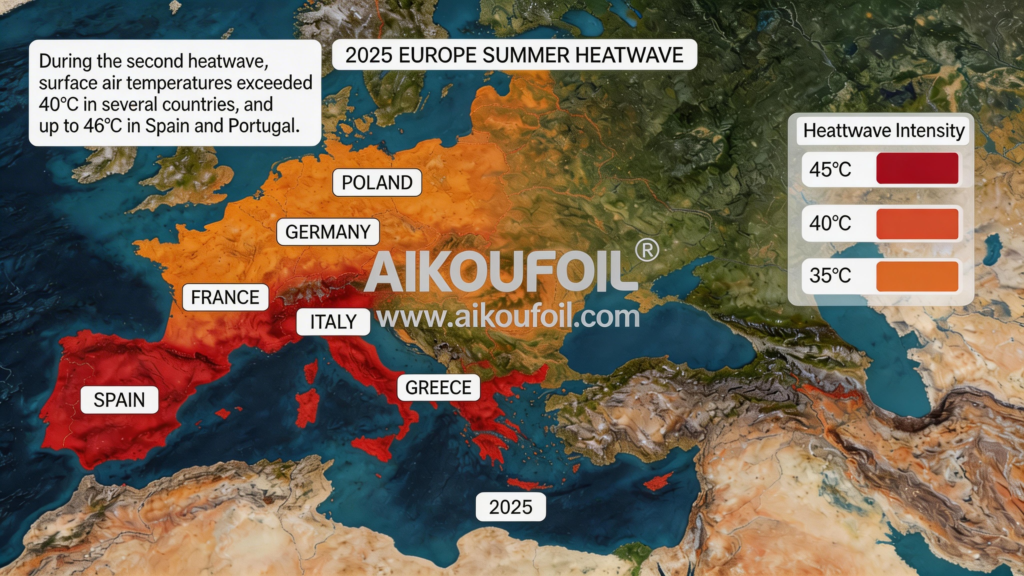
According to the UK Met Office, the summer of 2025 was officially the hottest on record, with a mean temperature of 16.10°C—surpassing the previous record of 15.76°C set in 2018 . This wasn’t an isolated British phenomenon. Across the continent, Spain’s national weather service AEMET reported June 2025 as the hottest June in Spanish history, with an average temperature of 23.6°C, while mainland Portugal recorded a staggering 46.6°C—a new June temperature record .
What made summer 2025 particularly challenging for supply chains was not just the peak temperatures, but the persistence of heat. The Met Office noted that “a summer as hot or hotter than 2025 is now 70 times more likely than it would be in a ‘natural’ climate with no human-caused greenhouse gas emissions” . This statistical reality signals a fundamental shift: extreme heat is no longer an anomaly but a recurring condition that businesses must build into their operational planning.
For cold chain logistics, the impact was immediate and severe. Research from the European Central Bank (ECB) published in July 2025 confirmed that heatwaves have a prolonged negative effect on regional economic activity, with output remaining 1.5% lower even two years after an extreme heat event . The food and beverage sector, heavily reliant on temperature-controlled transport, was disproportionately affected.
When Heat Attacks: How Rising Temperatures Destroy Cold Drink Quality
The vulnerability of cold beverages to heat is not merely about temperature—it’s about a cascade of chemical and physical reactions that begin the moment the product leaves a controlled environment.
The Temperature Excursion Problem
In cold chain logistics, even minor deviations from optimal temperature ranges can have catastrophic effects on product quality. Industry data indicates that a mere 1°C increase at low temperatures can reduce a product’s shelf life by up to 50% . For carbonated beverages, temperature fluctuations accelerate the escape of dissolved CO₂, resulting in flat, unappealing drinks. For fruit juices and functional beverages, heat accelerates oxidation, degrading both nutritional value and flavor profile.
The Plastic and Paper Problem
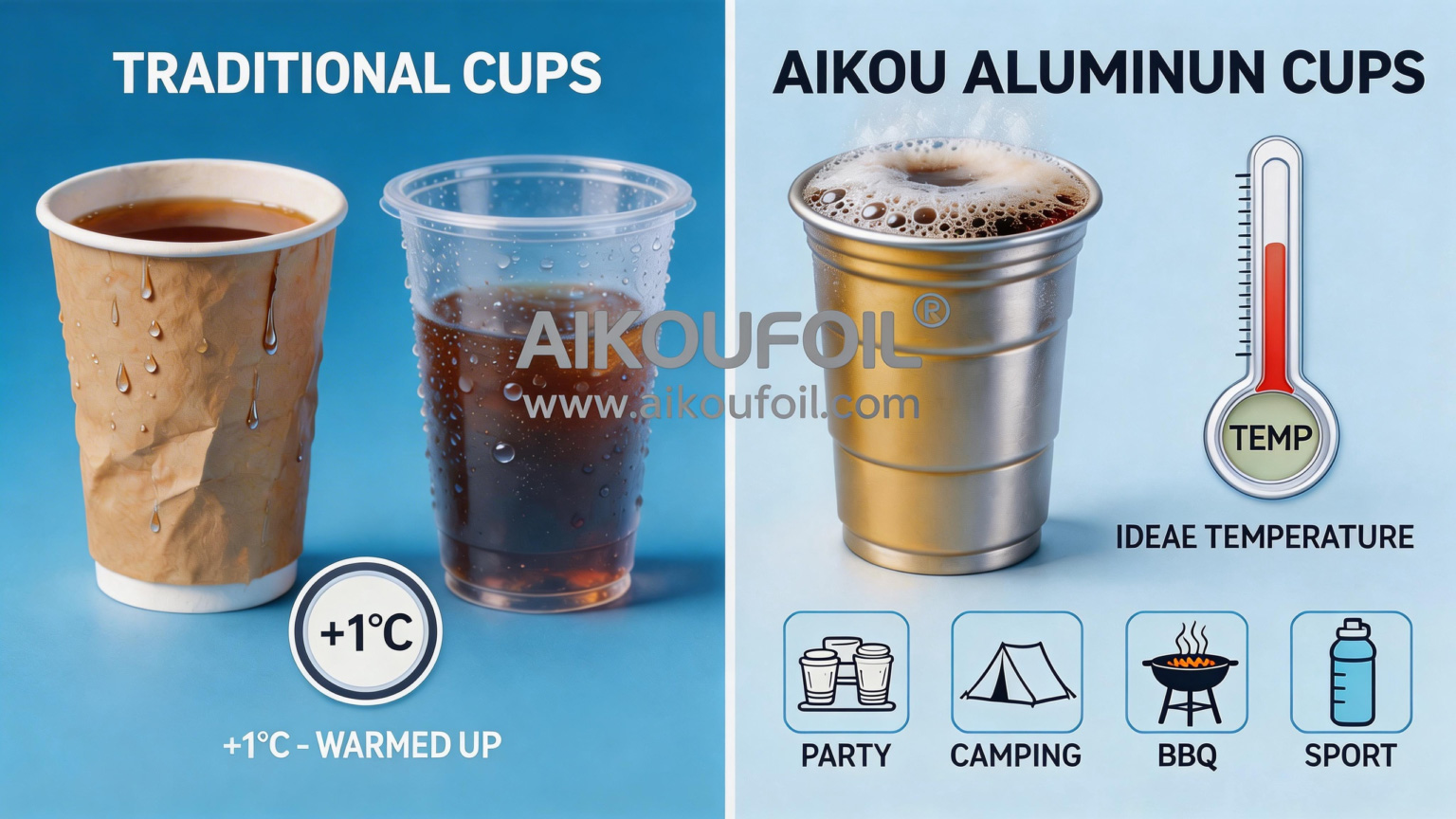
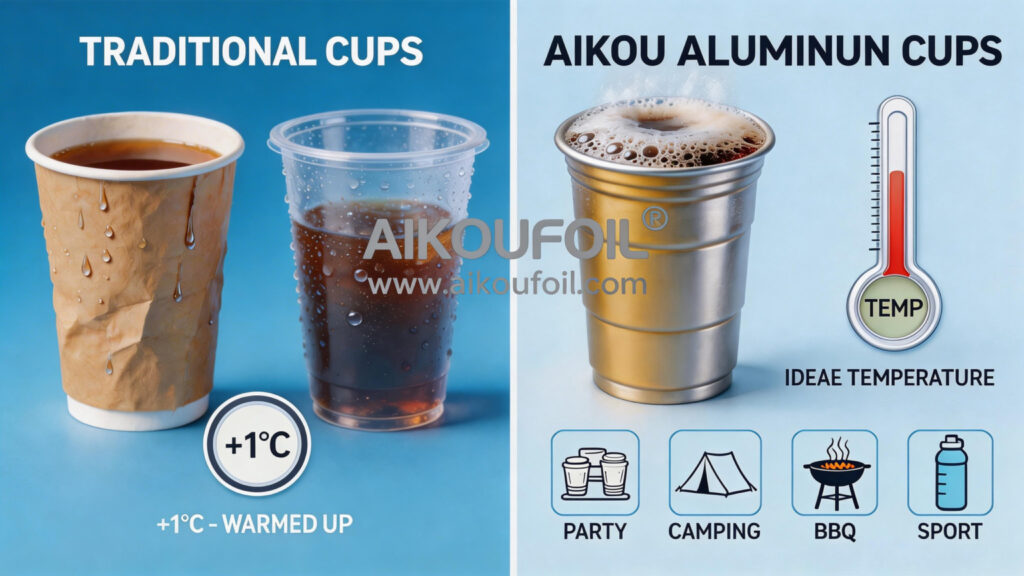
Traditional plastic cups and paper cups with polyethylene (PE) coating perform poorly under heat stress for several reasons
- Thermal Conductivity: Plastic and paper materials offer minimal insulation against external heat, allowing rapid temperature transfer from the environment to the beverage inside.
- Barrier Weakness: Standard PE-coated paper cups have oxygen transmission rates (OTR) and water vapor transmission rates (WVTR) that increase significantly at elevated temperatures, compromising the beverage’s protection .
- Structural Degradation: Paper cups can become soggy and lose structural integrity when condensation forms in humid, hot conditions, leading to leaks and customer complaints.
The Aluminum Advantage: Why Material Science Matters in Extreme Heat
Aluminum foil cups offer a fundamentally different value proposition in high-temperature environments, rooted in the material’s unique physical properties.
Superior Barrier Protection
Aluminum provides what material scientists call a “total barrier” against the three primary enemies of beverage freshness: oxygen, moisture, and light. Unlike plastic and paper, which become more permeable at elevated temperatures, aluminum maintains its barrier integrity across a wide temperature range. Aluminum foil is virtually impermeable to oxygen, water vapor, and gases, preventing oxidation reactions that cause flavor degradation and nutrient loss .
Thermal Reflection, Not Absorption
The key distinction in hot weather performance lies in how aluminum interacts with heat. Unlike plastic, which absorbs thermal radiation and conducts it inward, aluminum’s reflective surface deflects a significant portion of radiant heat. This means the beverage inside remains cooler for longer, even when ambient temperatures soar.
Rapid Cooling Recovery
Aluminum’s excellent thermal conductivity works in reverse as well. When a cold beverage in an aluminum cup is exposed to brief periods of heat (such as during loading, transport handoffs, or outdoor serving), the cup can rapidly return to its original temperature once returned to a cooled environment—a property that plastic and paper lack.
Aikou Aluminum Foil Cups: Engineered for Heat-Resistant Beverage Protection
As beverage brands and food and beverage chain operators seek solutions to the heat-related challenges exposed by summer 2025, Aikou Environmental Materials Co., Ltd. offers a proven, scalable answer.
Food-Grade Safety You Can Trust
Every Aikou aluminum foil cup is manufactured using food-grade aluminum that meets stringent international safety standards. Our products are certified compliant with FDA requirements, EU SGS standards, and ISO 9001 quality management systems . This ensures that even under extreme temperature conditions, the material remains stable and does not compromise beverage safety or taste.
Advanced Coating Technology
Aikou’s aluminum cups feature specialized food-grade internal coatings that prevent any direct contact between the beverage and the aluminum substrate. This coating system is engineered to maintain its integrity across temperature ranges from freezing to 100°C+, ensuring consistent performance whether the cup is used for iced coffee in a heatwave or hot beverages in winter.
Quality Testing for Real-World Conditions
We don’t just test our cups in laboratory conditions—we test them for the realities of summer 2025 supply chains. Our quality control protocols include:
- Leak Testing: Verifying liquid-tight integrity under pressure and temperature variation
- Heat Seal Testing: Measuring lid adhesion strength across temperature ranges to ensure secure closure during transport
- Compression Testing: Ensuring structural stability when stacked in warm warehouses or delivery vehicles
Customizable Branding That Lasts
Heat resistance extends to branding. Aikou’s printing technologies use food-grade inks that maintain adhesion and color fidelity even under thermal stress. Your brand logo remains visible and professional throughout the entire consumer journey—from refrigerator to hand to recycling bin.
From Production to Consumer: Protecting Beverage Quality Across the Supply Chain
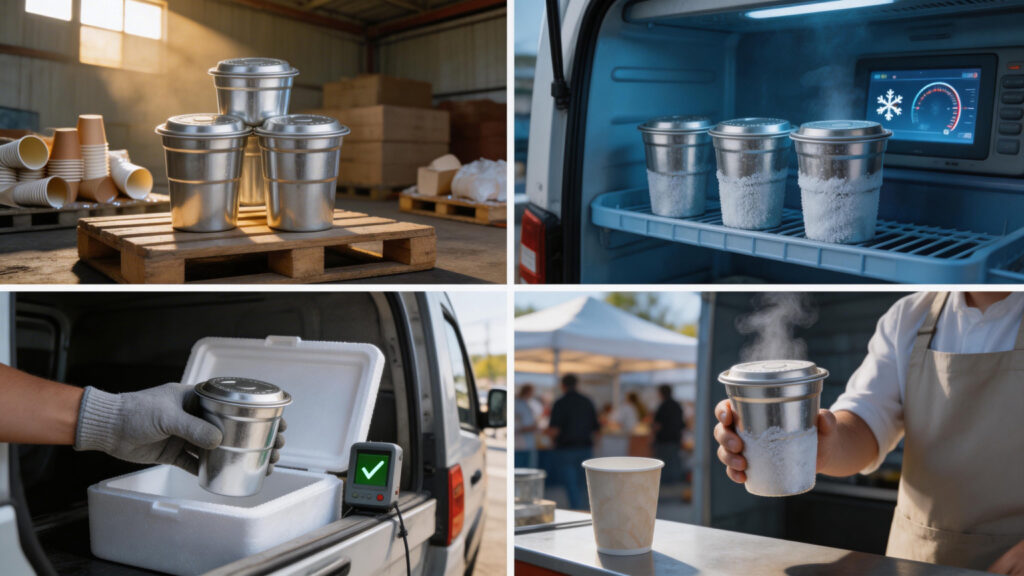
The true test of any packaging solution lies not in controlled laboratory conditions but in the unpredictable reality of real-world supply chains. Aikou aluminum cups have been engineered to perform at every stage:
1. Warehouse Storage
In un-air-conditioned warehouses where summer temperatures can exceed 35°C, Aikou cups maintain their structural integrity. Their stackable design maximizes storage efficiency while the aluminum’s thermal properties help protect the product inside.
2. Refrigerated Transport
When loaded into refrigerated trucks, aluminum’s rapid heat transfer properties mean that the cups quickly reach and maintain optimal serving temperature. This efficiency reduces the cooling load on transport vehicles, contributing to lower energy consumption across the cold chain.
3. Last-Mile Delivery
The final leg of delivery is often the most vulnerable to temperature excursions. Aikou cups’ superior insulation properties help maintain beverage temperature during the critical period between delivery vehicle and consumer handoff.
4. Outdoor Service
For outdoor events, patios, and food trucks operating in summer heat, Aikou aluminum cups provide extended drinkability—keeping beverages refreshingly cold for longer than plastic or paper alternatives.
Sustainability: The Environmental Dividend of Aluminum Cups
For beverage brands and catering chain operators, the shift to aluminum cups isn’t just about heat performance—it’s about aligning packaging strategy with environmental commitments.
Infinite Recyclability
Aluminum is infinitely recyclable without loss of quality. This stands in stark contrast to plastic, which degrades with each recycling cycle, and paper cups with PE coating, which are notoriously difficult to recycle due to their mixed-material construction. Aikou’s aluminum cups can be recycled again and again, contributing to a circular economy model.
Lower Carbon Footprint
Using recycled aluminum reduces CO₂ emissions by approximately 95% compared to virgin aluminum production . Aikou incorporates high percentages of recycled content in our manufacturing process, helping our customers reduce their Scope 3 emissions.
Compliance with Emerging Regulations
As European regulations like the Packaging and Packaging Waste Regulation (PPWR) take effect, the demand for truly recyclable packaging will only increase. Aluminum cups offer a future-proof solution that meets and exceeds regulatory requirements.
Future-Proof Your Beverage Packaging: Take Action Today
The summer of 2025 has delivered an unmistakable message to the beverage industry: climate change is no longer a distant forecast but a present reality affecting every aspect of operations. For brands that rely on cold beverages as a core product offering, the choice of packaging has become a strategic decision with direct implications for customer satisfaction, brand reputation, and operational resilience.
Aikou Environmental Materials Co., Ltd. stands ready to help you navigate this new landscape. With our expertise in aluminum foil cup manufacturing, commitment to quality, and understanding of the challenges facing beverage brands in a warming world, we offer more than just a product—we offer a partnership.
Your Next Steps:
- Request Samples: Experience the Aikou difference firsthand. Test our aluminum cups in your own operations under real-world conditions.
- Get a Custom Quote: Share your volume requirements, branding needs, and specific application challenges for a tailored solution.
- Consult Our Experts: Our technical team can help you evaluate how Aikou aluminum cups can address your specific heat-related packaging challenges.
Email: [email protected]
Visit: www.aikou.com/aluminum-coffee-capsules