How Aikou Aluminum Foil Containers Solve the $2.1B Night Economy Headache: Reducing Payout Rates During the World Cup Rush

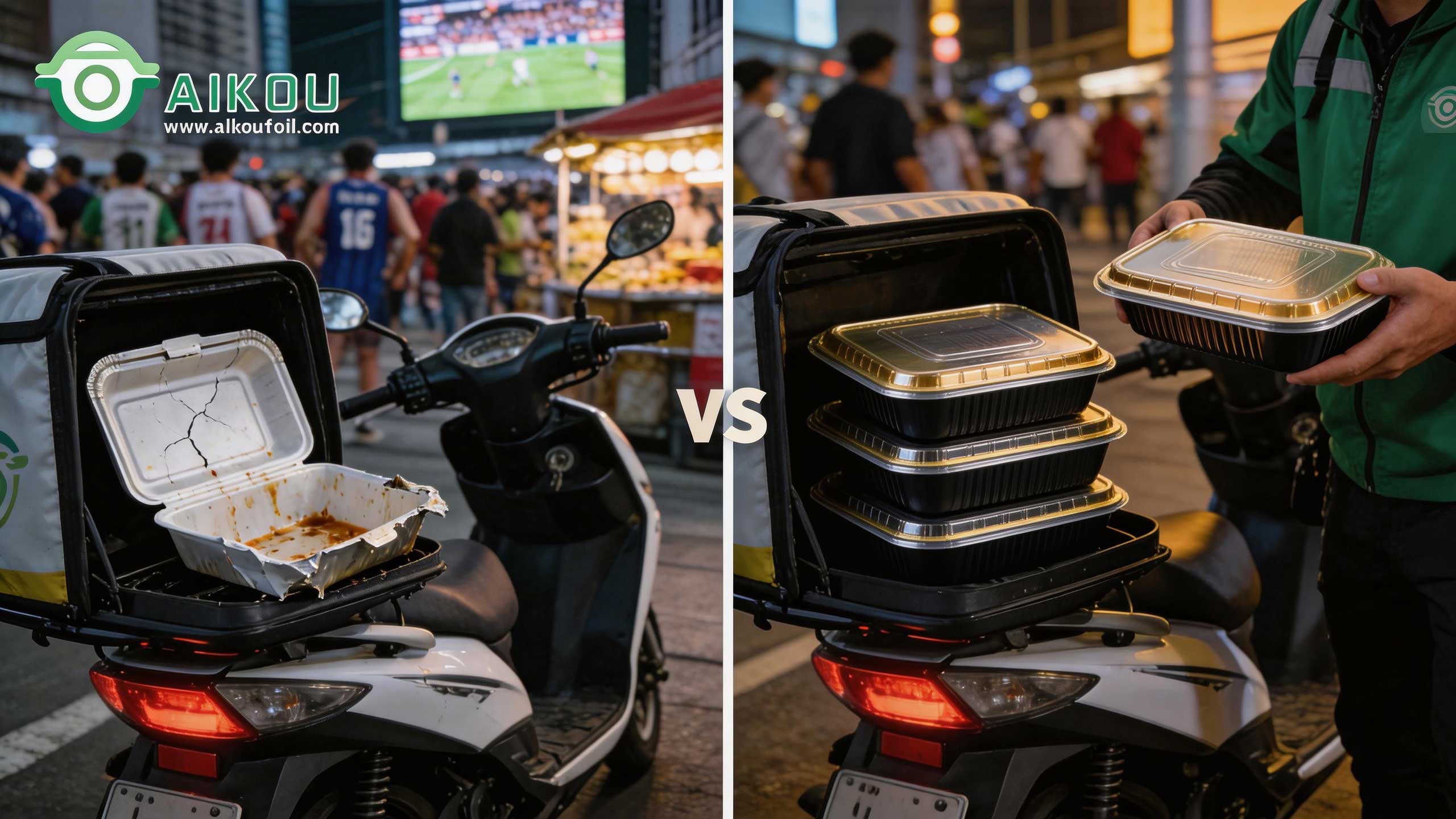
Table of Contents
Last Updated on 10 April, 2026 by Luca
Aluminum foil containers are emerging as the unexpected game-changer for Southeast Asia’s food delivery platforms, where the convergence of the 2026 World Cup and a booming night economy presents a lucrative yet high-risk opportunity for merchants on GrabFood and similar apps. According to industry projections, late-night orders (22:00-02:00) are expected to surge by over 200% during the tournament . However, this spike coincides with a critical operational challenge: packaging failure. Standard plastic and paper containers, subjected to the rigors of motorcycle delivery on uneven roads, are buckling under pressure. The result is a 30% increase in merchant payout rates due to spillage-related claims and negative reviews. In an ecosystem where algorithmic ranking punishes high-defect rates, packaging is no longer just a container—it is a critical determinant of profitability and platform visibility.
Aluminum Foil Containers vs. Plastic: Why Traditional Packaging Fails Under Pressure
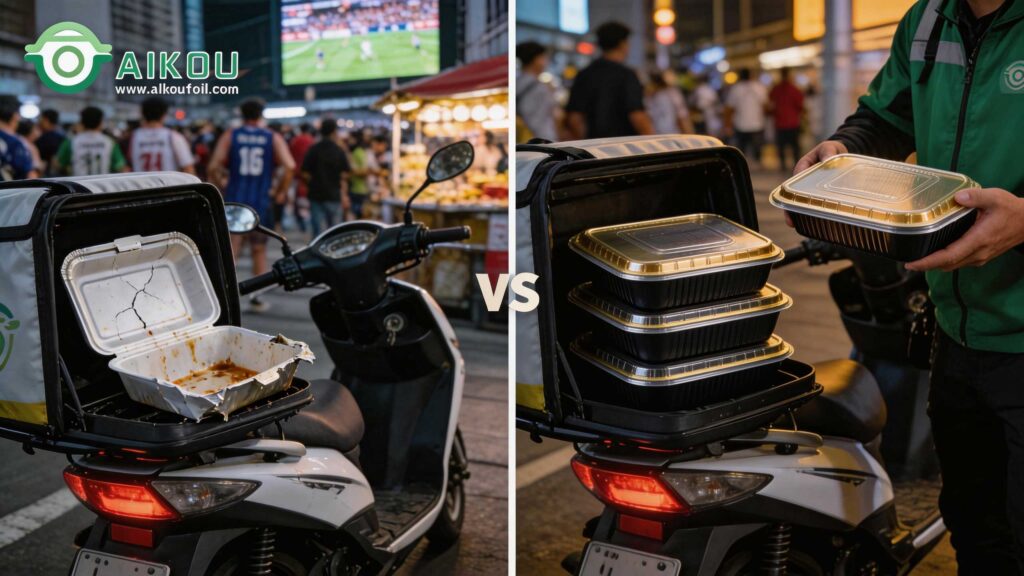
The Southeast Asian delivery landscape is uniquely demanding. Unlike the car-centric delivery models in Western markets, motorcycles dominate, navigating potholes, speed bumps, and high-density urban traffic. Simultaneously, World Cup cuisine is unforgiving. High-volume orders of fried snacks, barbecue, and noodle dishes swimming in broth create a “perfect storm” for packaging failure . Traditional polypropylene (PP) or paper containers, with wall thicknesses often below 0.6mm, lack structural rigidity. Under the compressive forces of stacked delivery bags and the vibrational stress of a 30-minute ride, these containers deform, lids pop off, and seals break . The result is not merely a messy meal; it triggers a chain reaction: customer chargebacks, negative reviews, and a subsequent drop in the merchant’s algorithmic ranking on platforms like GrabFood, which systematically demotes vendors with high return rates.For businesses navigating the World Cup rush, upgrading to “aluminum foil containers” is a strategic move to mitigate these risks.
Aikou’s Technical Solution: Engineering Rigor for Real-World Chaos
Aikou addresses this market gap through material science and precision engineering. Unlike conventional containers, the Aikou 8011 aluminum foil tray is manufactured from high-strength aluminum alloy. This material offers a superior strength-to-weight ratio, ensuring the container maintains its structural integrity even when stacked at the bottom of a full delivery bag. The key lies in its mechanical properties: the 8011 alloy provides exceptional rigidity against compression and impact, preventing the deformation that causes lids to unseal. Furthermore, the heat-sealable or crimped-edge design creates a hermetic seal that is 100% leak-proof. For merchants, this translates to a tangible reduction in operational costs. By slashing payout rates by up to 30%, Aikou containers act as a buffer against the platform’s algorithmic penalties, ensuring that consistent, high-quality delivery performance maintains high search rankings during peak demand periods.
Beyond Durability: Sustainability, Compliance, and Customization
Beyond functionality, aluminum foil containers from Aikou offer a compelling sustainability story that resonates with eco-conscious consumers.Modern food service businesses require more than just functional packaging; they demand solutions that align with regulatory standards and consumer values. Aikou’s manufacturing advantage is rooted in GMP-certified workshops and automated production lines, ensuring consistent quality at scale. Critically, the containers meet U.S. FDA 21CFR175.300 standards for direct food contact, a non-negotiable requirement for international food chains and platforms concerned with food safety . Furthermore, as sustainability becomes a decisive factor for consumers and regulators, aluminum offers a significant advantage over plastic. Aikou containers are 100% recyclable, supporting the circular economy and helping merchants meet their Environmental, Social, and Governance (ESG) goals. For brands looking to capitalize on the World Cup hype, Aikou offers extensive customization options, allowing businesses to print high-resolution logos and themed graphics on the packaging, transforming a functional item into a powerful marketing tool that enhances brand recall during high-traffic events .
Securing Your Business During the World Cup and Beyond
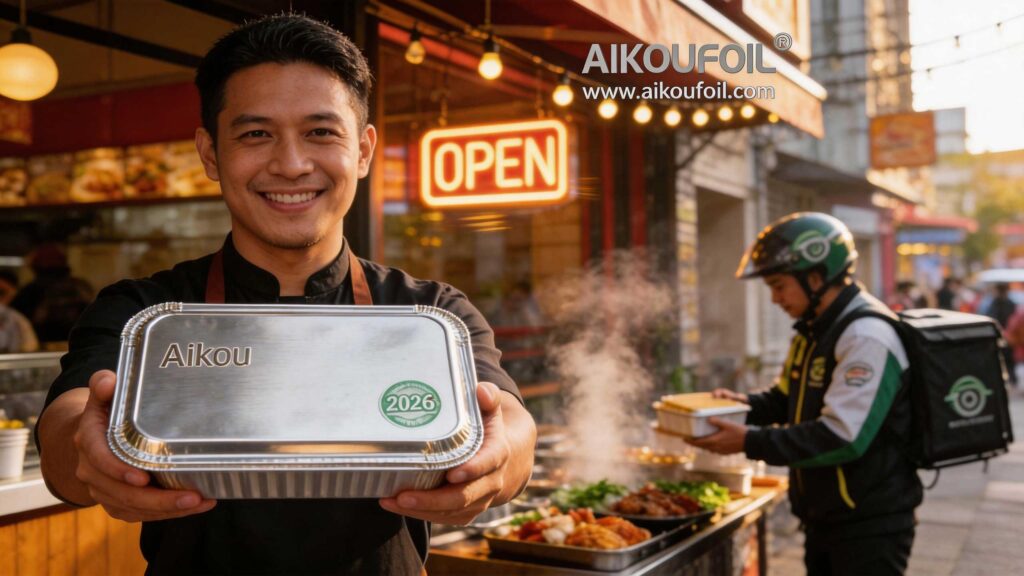
The choice of aluminum foil containers directly impacts your bottom line and platform standing.The upcoming World Cup represents a stress test for the entire food delivery ecosystem in Southeast Asia. The surge in volume will expose the fragility of traditional packaging solutions, and merchants who fail to adapt will face the dual penalty of increased financial losses from payouts and reduced visibility due to algorithmic demotion. Aikou’s aluminum foil containers provide a proven, engineered solution to this challenge. By combining superior structural integrity, 100% leak-proof sealing, FDA-compliant food safety, and sustainable recyclability, Aikou empowers merchants to deliver a premium customer experience that drives repeat business and positive reviews. Don’t let flimsy packaging turn your World Cup opportunity into a liability.