Aluminum Foil Capsule Cost Analysis: Breaking Down Pricing Structure for B2B Procurement

Last Updated on 15 December, 2025 by Luca
Table of Contents
Introduction: Understanding the True Cost of Coffee Capsules
For B2B buyers in the coffee industry, understanding the aluminum foil capsule cost structure is essential for making informed procurement decisions and maximizing return on investment. The final price per capsule represents a complex combination of material costs, production expenses, tooling investments, and supply chain logistics. This comprehensive cost analysis breaks down each component, providing transparency into where your money goes and identifying opportunities for cost optimization. Whether you’re a startup micro-roaster or an established brand, this guide will help you navigate pricing negotiations and make strategic decisions that balance quality, budget, and brand requirements.
Material Costs: The Foundation of Capsule Pricing
Aluminum Foil Specifications
Aluminum foil represents the single largest material cost component, typically accounting for 40-50% of the total capsule cost. The choice of aluminum grade, thickness, and barrier properties directly impacts both performance and price:
Aluminum Grades: The most common grades for coffee capsules are 8011 and 8079 series, which offer excellent formability and barrier properties. Grade 8011 provides superior strength and puncture resistance, while 8079 offers enhanced barrier protection against oxygen and moisture. Premium grades with specialized coatings can increase material costs by 15-25%.
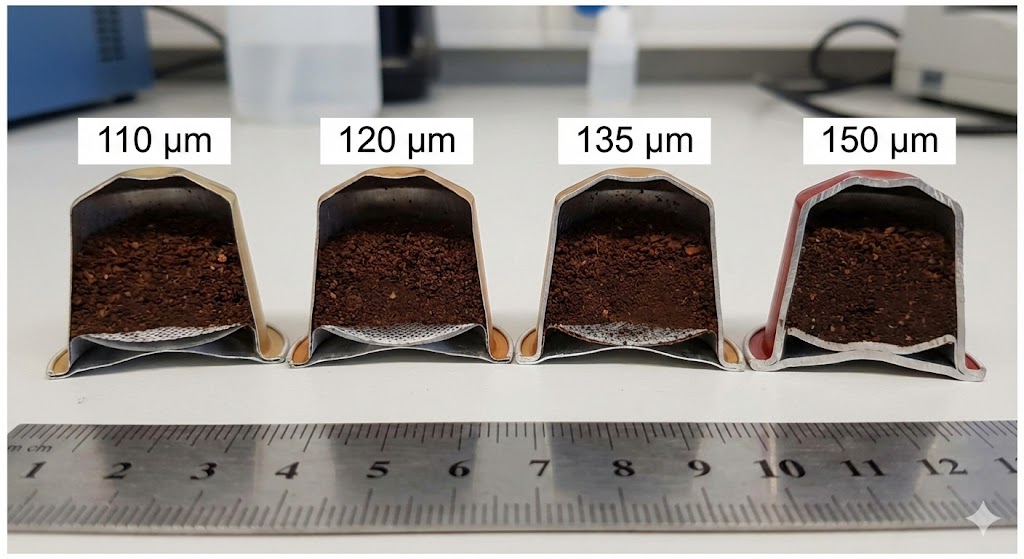
Thickness: Standard aluminum foil thickness ranges from 110-150 microns. Thinner foils (110-120 microns) reduce material costs by 10-15% but may compromise barrier performance. Thicker foils (130-150 microns) provide enhanced protection but increase costs proportionally.
Barrier Coatings: Food-grade heat seal lacquers and specialized barrier coatings add 5-10% to material costs but are essential for ensuring freshness preservation and shelf life extension.
Additional Material Components
Beyond aluminum foil, several other material components contribute to the total cost:
Heat Seal Coating: Food-grade lacquer applied to the inner surface of the foil ensures proper sealing with the capsule lid. This coating typically adds $0.005-0.008 per capsule and is essential for maintaining freshness.
Printing Materials: Ink, varnish, and lamination materials for custom branding. The cost varies significantly based on the number of colors, printing technology, and special effects (e.g., metallic inks, spot UV).
Lid Material: The capsule lid, typically made of food-grade aluminum foil or composite materials, accounts for 10-15% of material costs. Premium lids with specialized coatings for enhanced aroma preservation can increase costs by 20-30%.
Packaging Components: Inner bags, outer cartons, and protective materials for shipping add 5-10% to the total cost
Production Costs: Manufacturing and Labor Expenses
Equipment and Setup Costs
Production equipment represents a significant capital investment for capsule manufacturers, and these costs are amortized across production runs:
Forming Machines: High-speed capsule forming machines capable of producing 100-300 capsules per minute. These machines require regular maintenance and calibration to ensure consistent quality.
Filling and Sealing Equipment: Automated filling systems that precisely dose coffee grounds and seal the capsules with aluminum lids. Advanced systems with nitrogen flushing for oxygen removal add 15-20% to equipment costs.
Quality Control Systems: Vision inspection systems, leak detection equipment, and weight checkers that monitor every capsule during production. These systems add 10-15% to production costs but are essential for maintaining quality standards.
Setup Time: Each production run requires 2-4 hours for machine setup, cleaning, and calibration. This setup cost is spread across the entire production quantity.
Labor and Overhead Expenses
Labor costs include both direct production labor and indirect support staff:
Direct Labor: Machine operators, quality control technicians, and production supervisors. Labor costs typically account for 15-20% of production expenses.
Indirect Labor: Maintenance technicians, quality assurance managers, and administrative staff. These positions support production operations but are not directly involved in capsule manufacturing.
Overhead Expenses: Factory rent, utilities (electricity, water, gas), insurance, and depreciation of equipment. Overhead typically represents 20-25% of total production costs.
Energy Consumption: High-speed production equipment consumes significant electricity, particularly during forming and sealing operations. Energy costs can account for 5-8% of production expenses.
Tooling and Customization Costs
Mold and Tooling Investment
Custom tooling represents a significant upfront investment that is amortized over the production quantity:
Capsule Mold: The forming mold that shapes the aluminum foil into the capsule body. Mold costs range from $5,000-20,000 depending on complexity, size, and material (aluminum vs. steel).
Lid Tooling: Tooling for the capsule lid, including cutting dies and sealing tools. Costs typically range from $2,000-8,000.
Printing Plates: For offset or flexographic printing, printing plates or cylinders are required. Digital printing eliminates this cost but may have higher per-unit pricing for small quantities.
Amortization: Tooling costs are typically amortized over the first 100,000-500,000 units, depending on the supplier’s pricing model. This means the per-unit cost decreases as production volume increases.

Customization and Branding Expenses
Custom branding adds to the total cost but is essential for brand differentiation:
Design and Artwork: Graphic design services for creating packaging artwork. Costs range from $500-3,000 depending on complexity and designer experience.
Color Matching: Pantone color matching ensures brand colors are accurately reproduced. Each additional color adds $0.002-0.005 per capsule.
Special Finishes: Premium finishes like hot foil stamping, embossing, or spot UV varnish add $0.005-0.015 per capsule but create a premium look and feel.
Variable Data Printing: Printing batch codes, expiration dates, or QR codes adds minimal cost ($0.0005-0.001 per capsule) but provides traceability and consumer engagement.
Logistics and Supply Chain Costs
Packaging and Shipping Expenses
Logistics costs include all expenses associated with getting the finished capsules to your facility:
Primary Packaging: Inner bags, desiccant packets, and protective materials that directly contact the capsules. These components ensure product integrity during transit and storage.
Secondary Packaging: Outer cartons, shipping boxes, and pallets. The cost depends on the quantity ordered and the level of protection required.
Shipping and Freight: Transportation costs from the manufacturer to your location. These costs vary based on distance, shipping method (air vs. sea), and order quantity.
Customs and Duties: For international shipments, import duties, taxes, and customs clearance fees add 5-15% to the total cost.
Insurance: Product insurance during transit protects against loss or damage. Insurance typically adds 1-2% to logistics costs.
Volume-Based Pricing Structure
Pricing Tiers and Economies of Scale
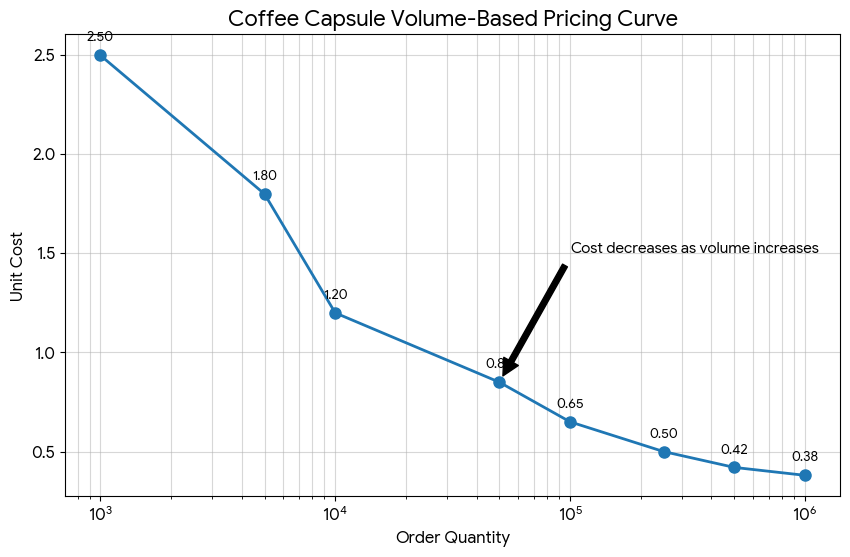
Volume-based pricing allows buyers to achieve significant cost savings as order quantities increase:
Tier 1: 10,000-49,999 Units: Entry-level pricing with per-unit costs of $0.08-0.12. This tier is suitable for market testing or small businesses with limited inventory capacity.
Tier 2: 50,000-149,999 Units: Growth phase pricing offering 15-20% savings compared to Tier 1. Per-unit costs range from $0.065-0.095.
Tier 3: 150,000-499,999 Units: Volume pricing for established brands. Per-unit costs drop to $0.055-0.085, representing 25-30% savings compared to Tier 1.
Tier 4: 500,000+ Units: Bulk pricing for high-volume production. Per-unit costs can be as low as $0.045-0.065, providing the most competitive pricing for large-scale operations.
MOQ Considerations and Cost Implications
Minimum order quantities (MOQ) directly impact pricing and should be carefully considered:
Low MOQ (500-1,000 units): Digital printing technology enables small orders but at higher per-unit costs ($0.12-0.18). This option is ideal for market testing or limited edition releases.
Medium MOQ (5,000-10,000 units): Offers a balance between flexibility and cost efficiency. Per-unit costs range from $0.09-0.13.
High MOQ (50,000+ units): Provides the most competitive pricing but requires significant inventory investment and storage capacity.
Tooling Amortization: For custom designs, tooling costs are typically amortized over the first production run. This means the initial order will have higher per-unit costs, while subsequent orders benefit from fully amortized tooling.
Cost Optimization Strategies
Strategic Sourcing and Negotiation
Implement these strategies to optimize your aluminum foil capsule costs:
Request Detailed Cost Breakdowns: Ask suppliers for a comprehensive cost breakdown that includes material costs, production expenses, tooling amortization, and logistics. This transparency allows you to identify areas for negotiation.
Negotiate Volume Discounts: Based on your projected annual usage, negotiate tiered pricing that provides discounts as your order quantities increase throughout the year.
Consolidate Orders: Combine multiple product lines or SKUs into single production runs to achieve higher volume pricing tiers.
Standardize Components: Use standard capsule sizes, colors, and materials across your product line to benefit from economies of scale in material purchasing.
Consider Multiple Suppliers: Work with 2-3 qualified suppliers to create competition and leverage better pricing terms.
Design and Material Optimization
Optimize your capsule design and material selection to reduce costs without compromising quality:
Simplify Printing: Reduce the number of colors in your design. Each additional color increases printing costs by $0.002-0.005 per capsule.
Optimize Foil Thickness: Work with your supplier to determine the optimal foil thickness that balances barrier performance and cost. Thinner foils can reduce material costs by 10-15%.
Use Standard Sizes: Avoid custom capsule sizes that require unique tooling. Standard sizes (e.g., 37mm diameter) benefit from existing tooling and lower per-unit costs.
Limit Special Effects: While premium finishes like hot foil stamping and embossing create visual impact, they add significant cost. Use them strategically rather than across your entire product line.
Plan for Long-Term: Consider tooling amortization over multiple production runs rather than a single order to reduce the per-unit impact.
Total Cost of Ownership Analysis
Beyond the Purchase Price
Total cost of ownership (TCO) considers all costs associated with purchasing and using aluminum foil capsules:
Purchase Price: The initial cost per capsule, including materials, production, and tooling amortization.
Inventory Carrying Costs: The cost of storing inventory, including warehouse space, insurance, and capital tied up in inventory. These costs typically add 15-25% to the purchase price annually.
Quality-Related Costs: Expenses associated with quality issues, including returns, replacements, and potential brand damage. Investing in higher quality upfront can reduce these costs significantly.
Supply Chain Risks: Costs associated with supply chain disruptions, including production delays, stockouts, and expedited shipping.
Sustainability Considerations: Environmental impact and corporate social responsibility factors that may influence long-term brand value and consumer perception.

Practical Cost Analysis Worksheet
Use this worksheet to analyze and compare supplier pricing:
Supplier Comparison:
- Supplier Name: _______________
- MOQ: _______________
- Per-Unit Price: $_______________
- Tooling Cost: $_______________ (amortized over _______________ units)
- Payment Terms: _______________
- Lead Time: _______________ weeks
Cost Breakdown (per 1,000 units):
- Material Costs: $_______________
- Production Costs: $_______________
- Tooling Amortization: $_______________
- Printing/Customization: $_______________
- Packaging: $_______________
- Shipping: $_______________
- Total Cost: $_______________
Quality Assessment:
- Certifications: ISO 9001 [ ] ISO 22000 [ ] FDA [ ] SGS [ ]
- Quality Control Processes: _______________
- Sample Quality: Excellent [ ] Good [ ] Fair [ ] Poor [ ]
Conclusion: Making Informed Procurement Decisions
Understanding the complete aluminum foil capsule cost structure empowers B2B buyers to make strategic decisions that balance quality, budget, and brand requirements. By analyzing material costs, production expenses, tooling investments, and supply chain logistics, you can identify opportunities for cost optimization without compromising on quality or performance.
Remember that the lowest per-unit price doesn’t always represent the best value. Consider the total cost of ownership, including inventory carrying costs, quality-related expenses, and supply chain risks. Building strong relationships with reliable suppliers who offer transparent pricing and consistent quality will ultimately deliver the best return on investment for your coffee capsule procurement.
Ready to optimize your coffee capsule costs? Contact us today for a detailed cost analysis and personalized pricing proposal based on your specific requirements and volume needs.