The B2B Buyer‘s Guide to Aluminum Coffee Capsules: Sourcing, Compliance & Market Trends for 2026

Last Updated on 10 April, 2026 by Luca
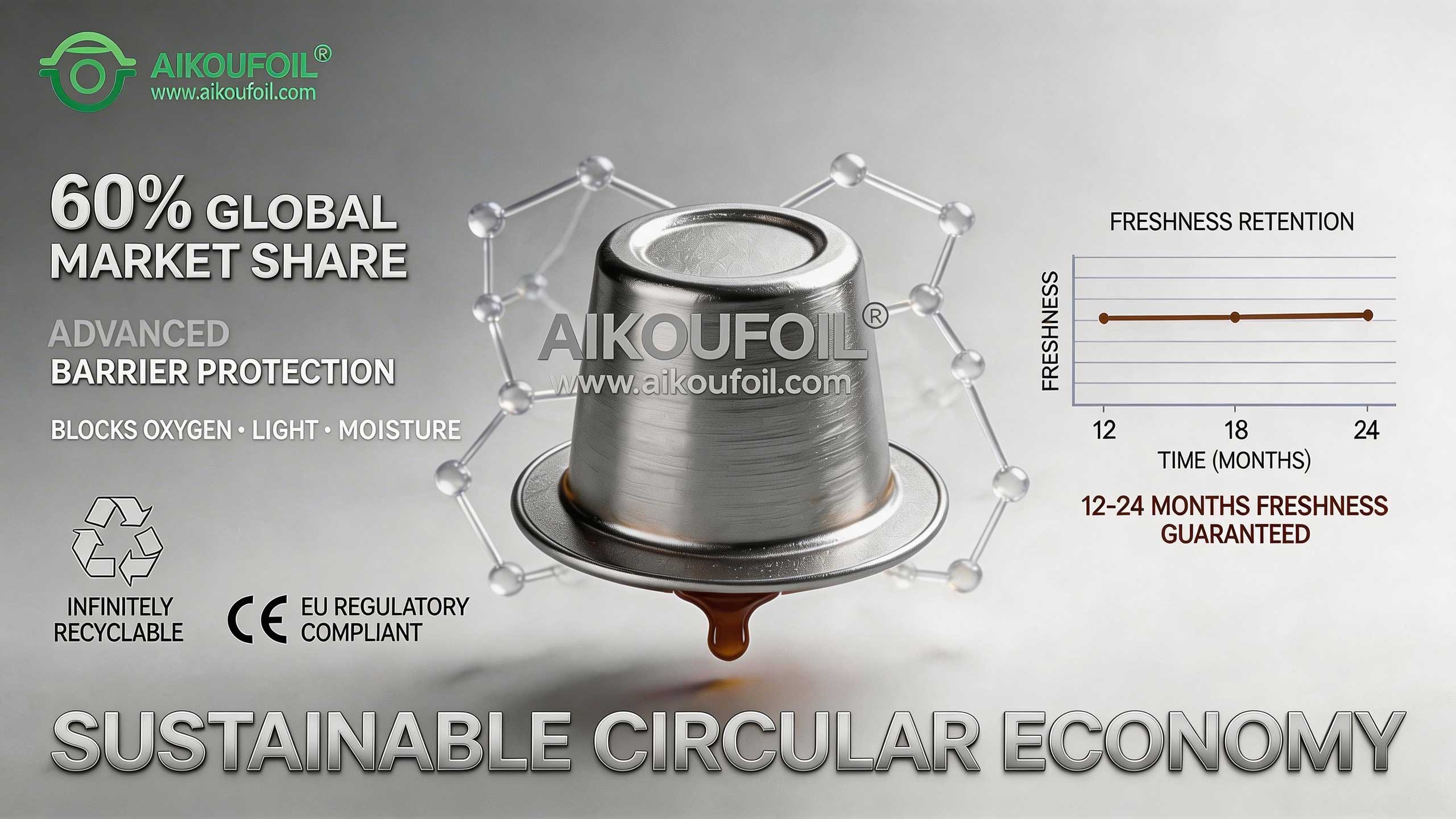
Aluminum coffee capsules in our daily lives is becoming increasingly common.The global shift toward single-serve coffee shows no signs of slowing. With the aluminum coffee capsule market projected to reach $3.5billion by 2033, growing at a CAGR of 6.8% , professional buyers face increasing complexity in supplier selection. This guide delivers data-driven insights into material specifications, regulatory compliance, quality control protocols, and sustainability requirements—empowering procurement managers, brand owners, and coffee roasters to make informed sourcing decisions that balance cost, quality, and market positioning.
Table of Contents
Market Overview: Why Aluminum Dominates the Single-Serve Segment
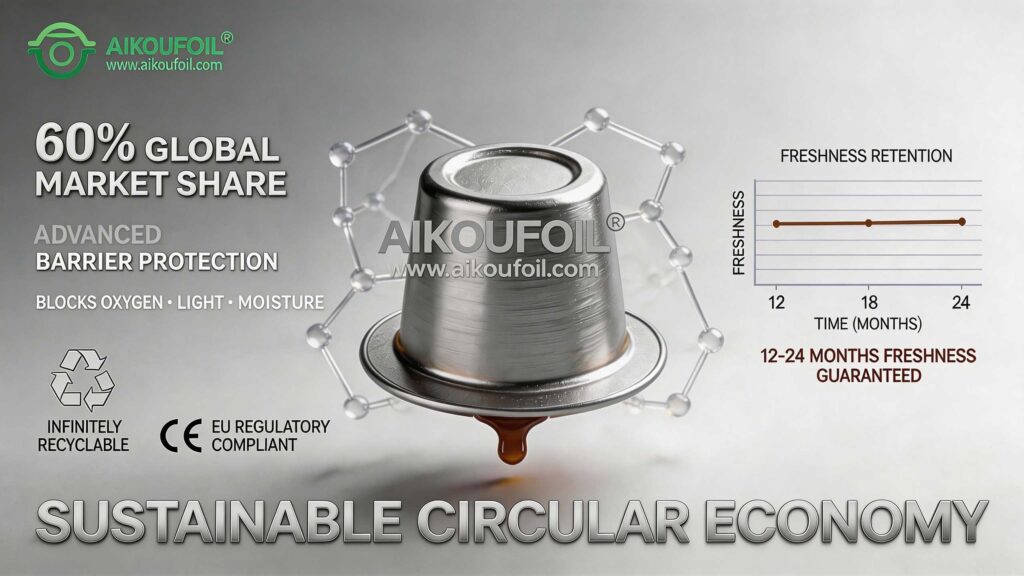
Aluminum accounts for approximately 60% of the global coffee capsule market, preferred for its superior barrier properties against oxygen, light, and moisture—preserving coffee freshness for up to 12-24 months without refrigeration. Unlike plastic alternatives, aluminum offers infinite recyclability without quality degradation, aligning with tightening EU regulations and corporate sustainability commitments.
The market bifurcates into two primary segments: household consumption (driven by remote work trends) and commercial applications (offices, hotels, food service). Europe currently leads with 36% market share, supported by mature recycling infrastructure and premium coffee culture, while Asia-Pacific exhibits the fastest growth at 7.05% CAGR through 2031.
Material Science: Understanding Aluminum Specifications for Coffee Capsules
Aluminum Alloys and Thickness Standards
Professional buyers must verify the specific aluminum grade used in capsule production. The industry standard employs 8011-O or 8079-O alloys, typically ranging from 0.07mm to 0.12mm in thickness. These tempers provide the ductility necessary for deep drawing without micro-cracks that could compromise barrier integrity.
Barrier Coatings and Food Contact Safety
Raw aluminum reacts with acidic coffee oils. Therefore, food-grade lacquers (typically epoxy-based or BPA-non-intent alternatives) are applied to interior surfaces. Suppliers must provide documentation confirming compliance with FDA 21 CFR §175.300 and EU Regulation (EC) No 1935/2004, including migration testing reports showing overall migration below 10 mg/dm².
Production Technology: From Foil to Finished Capsule
Precision Stamping and Deep Drawing
Oxygen is the enemy of coffee freshness. Reputable suppliers employ nitrogen flushing systems that reduce residual oxygen to below 0.5% inside each capsule before sealing. This inert atmosphere protects volatile aromatic compounds and extends shelf life. Buyers should request oxygen transmission rate (OTR) documentation, targeting values below 0.05 cm³/capsule/day.
- Tolerance control: ±0.02mm for rim dimensions ensuring machine compatibility
- Wall thickness distribution: Uniform thinning to prevent rupture under 19-bar extraction pressure
- Lid sealing surface: Flat, contamination-free rims for hermetic seals
Nitrogen Flushing and Freshness Preservation
Quality Control: Protecting Brand Reputation
In-Process Inspection Protocols
Top-tier manufacturers implement multi-stage quality control:
Modern production utilizes high-speed transfer presses operating at 600-1,200 capsules per minute. Critical parameters include:
- Vision inspection systems: Detect dimensional defects, surface scratches, or contamination at 0.1mm resolution
- Leak testing: Helium or pressure decay tests ensuring hermetic seals
- Seal strength verification: Peel strength targets of ≥1.5N/15mm for lidstock
Third-Party Certification Requirements
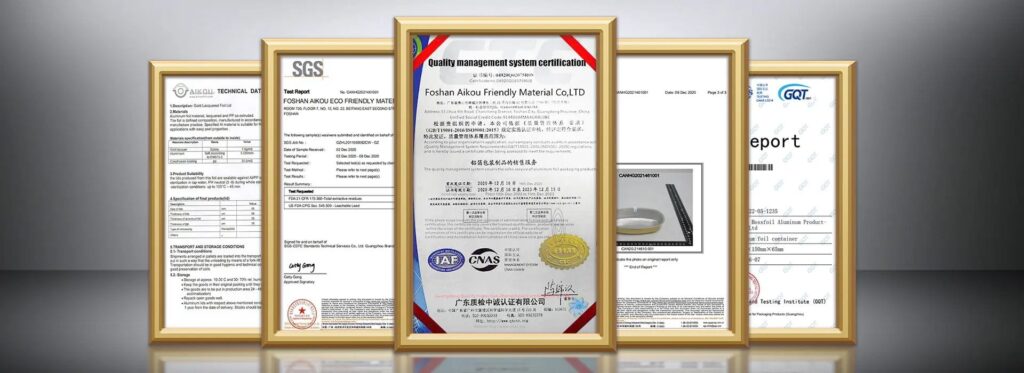
For B2B buyers, certifications are non-negotiable. Essential credentials include:
- ISO 9001: Quality management systems
- ISO 22000 or FSSC 22000: Food safety management
- BRCGS Packaging Materials: Global standard for packaging safety
Regulatory Compliance: Navigating Global Requirements
Key Markets and Their Standards
| Market | Regulatory Framework | Key Requirements |
|---|---|---|
| European Union | Framework Regulation (EC) No 1935/2004 + Plastics Implementation Measure (EU) No 10/2011 | Overall migration <10 mg/dm²; specific migration limits for heavy metals; declaration of compliance |
| United States | FDA 21 CFR | Food contact substance notifications; compliance with Good Manufacturing Practices |
| China | GB 4806 | National food safety standards for materials intended for food contact |
The PPWR Challenge: Recyclability at Scale
The EU’s Packaging and Packaging Waste Regulation (PPWR) , effective 2024, mandates that all packaging be recyclable at scale by 2030. For small aluminum formats like coffee capsules, this presents challenges—current European recycling rates for small aluminum packaging hover around 60% , with significant losses in incineration streams.
A new industry alliance launched January 2026, including Nestlé Nespresso, Lindt, and Amcor, aims to improve collection and sorting infrastructure across Europe. Buyers should prioritize suppliers engaged with such initiatives and those offering capsules compatible with emerging sorting technologies.
Sustainability: The Circular Economy Imperative
Recycled Content and Design for Recycling
Leading manufacturers now offer capsules incorporating post-consumer recycled (PCR) aluminum, reducing carbon footprint by up to 95% compared to primary aluminum. However, buyers must verify that recycled content does not compromise barrier performance or aesthetic quality.
Design considerations for recyclability include:
- Avoiding dark pigments that interfere with sorting optics
- Ensuring easy separation of aluminum from coffee grounds
- Using mono-material constructions where possible
Customization and Branding Opportunities
Visual Branding Options
Differentiation at the point of consumption drives brand recall. Suppliers offer:
- Full-color digital printing: Low minimum order quantities (starting at 1,000 units)
- Embossing/debossing: Tactile brand elements for premium positioning
- Anodized colors: Permanent coloration without additional coatings
- Laser etching: High-precision marking for limited editions
Technical Customization
Beyond aesthetics, capsules must perform flawlessly in specific machines:
- Compatibility testing: Verification across leading systems (Nespresso® original, Vertuo®, Dolce Gusto®)
- Flow rate optimization: Adjusting puncture patterns and internal geometry for specific coffee blends
- Dosage precision: Accommodating 5-7g ground coffee with ±0.1g accuracy
Conclusion: Partnering for Success in the Aluminum Coffee Capsule Market
Selecting the right aluminum coffee capsule supplier is a strategic decision that impacts product quality, brand perception, regulatory compliance, and environmental footprint. By applying the framework outlined in this guide—rigorous material verification, certification validation, technical capability assessment, and sustainability alignment—buyers can identify partners capable of supporting long-term growth.
At Aikou, we combine GMP-certified facilities, fully automated production lines, and in-house R&D capabilities to deliver aluminum coffee capsules that meet the most demanding global standards. Our ISO 9001 and FSSC 22000 certifications provide the assurance your brand requires, while our customization capabilities—from precision embossing to compatibility optimization—ensure your product stands out in a competitive market.
Contact Aikou Today
Ready to elevate your coffee capsule program? Contact our B2B sales team for a complimentary consultation and sample pack. We’ll help you navigate specifications, compliance requirements, and customization options tailored to your market positioning.
Email: [email protected]
Visit: www.aikou.com/aluminum-coffee-capsules
*Minimum order quantities apply. Custom samples available within 10-15 business days.*