Why Aluminum Foil Trays Are Still the Preferred Choice for Airline Catering

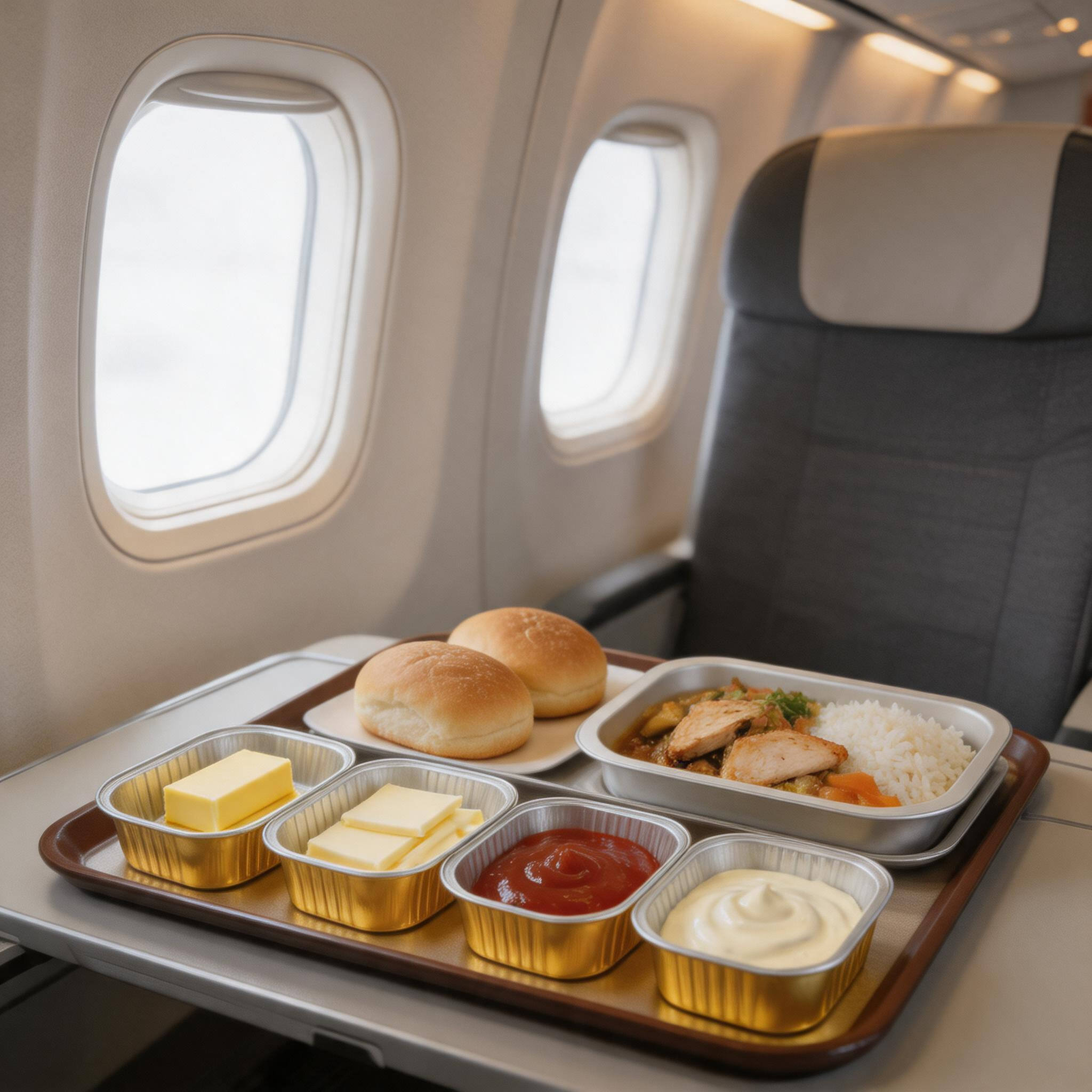
Last Updated on يوليو 24, 2026 by لوكا
Every airline meal represents a carefully coordinated process rather than a simple food service. Long before passengers receive a meal onboard, it has already passed through food preparation, portioning, packaging, cold storage, transportation, aircraft loading, and finally reheating in a very limited cabin environment.
Each step creates challenges for food packaging. Containers need to protect food quality, fit automated production lines, withstand refrigeration and transportation, and perform reliably during reheating. At the same time, airlines are constantly looking for ways to improve operational efficiency while maintaining high food safety standards.

This is why aluminum foil trays continue to be widely used in airline catering around the world. Despite the availability of alternative materials, aluminum remains a practical choice because it combines heat resistance, structural stability, lightweight design, and compatibility with modern catering operations.
In this article, we’ll look at why aluminum foil trays continue to play an important role in airline catering and what food service buyers should evaluate when selecting packaging for large-scale meal production.
جدول المحتويات
Airline Catering Is Different from Traditional Food Service
Preparing meals for an aircraft is very different from serving customers in a restaurant.
In most restaurants, food is cooked and served within a relatively short period of time. Airline meals, however, are usually prepared several hours—and sometimes even a day or more—before they are consumed. During that time, they may be chilled, transported to the airport, stored temporarily, loaded onto aircraft, and reheated shortly before serving.
This extended supply chain means the packaging has to perform consistently under changing conditions. It is not enough for a tray to simply hold food. It must also help maintain product quality throughout the entire catering process.
Packaging failures can affect much more than appearance. A leaking container may contaminate surrounding meals. A deformed tray may not fit airline oven racks properly. Poor sealing may shorten product shelf life or reduce food quality before passengers even board the aircraft.
For airline caterers producing thousands of meals every day, packaging consistency is just as important as food quality itself.
Why Aluminum Foil Trays Continue to Be Widely Used
Packaging materials have evolved over the years, yet aluminum foil trays continue to hold an important position in airline catering. This is largely because they offer a combination of properties that match the operational requirements of the industry.
One of their biggest advantages is versatility.
A single aluminum tray can often be used throughout multiple stages of the catering process—from food filling and heat sealing to refrigerated storage and oven reheating. Reducing the need to transfer food into different containers not only improves efficiency but can also lower the risk of contamination during handling.
Aluminum is also known for its excellent thermal conductivity. According to engineering reference data, pure aluminum has a thermal conductivity of approximately 205 W/m·K, allowing heat to spread efficiently across the container during reheating. Although the final heating result depends on food type and oven settings, this material property supports more even heat distribution compared with many packaging materials.
Another practical advantage is dimensional stability. Properly manufactured aluminum foil trays maintain their shape under both chilled and heated conditions, making them suitable for catering systems that rely on standardized equipment and automated handling.
Temperature Changes Are Part of Every Flight Meal
Unlike many food packaging applications, airline meals routinely experience multiple temperature transitions before reaching passengers.
A typical meal may be filled while still warm, rapidly chilled to slow bacterial growth, stored under refrigeration, transported in temperature-controlled vehicles, loaded onto an aircraft, and reheated shortly before serving.
This repeated shift between hot and cold environments requires packaging that can maintain both its structure and functionality.
Aluminum foil performs well under these changing conditions. It does not become brittle during refrigerated storage in the way some materials may under low temperatures, and it is also suitable for oven reheating when used according to product specifications.
For catering companies managing thousands of meals across multiple flight routes every day, reducing packaging-related issues helps improve operational efficiency and minimize unnecessary waste.
Manufacturer’s Insight
At AIKOU, we’ve worked with customers across different food packaging applications, including products designed for large-scale catering operations.
One thing we’ve consistently observed is that successful airline catering projects rarely depend on a single product feature. Instead, they rely on the balance between container strength, sealing performance, dimensional consistency, and production reliability.
A tray that performs well during sampling should also perform consistently after hundreds of thousands of units have been produced. This level of manufacturing consistency often has a greater impact on long-term operations than small differences in material specifications alone.
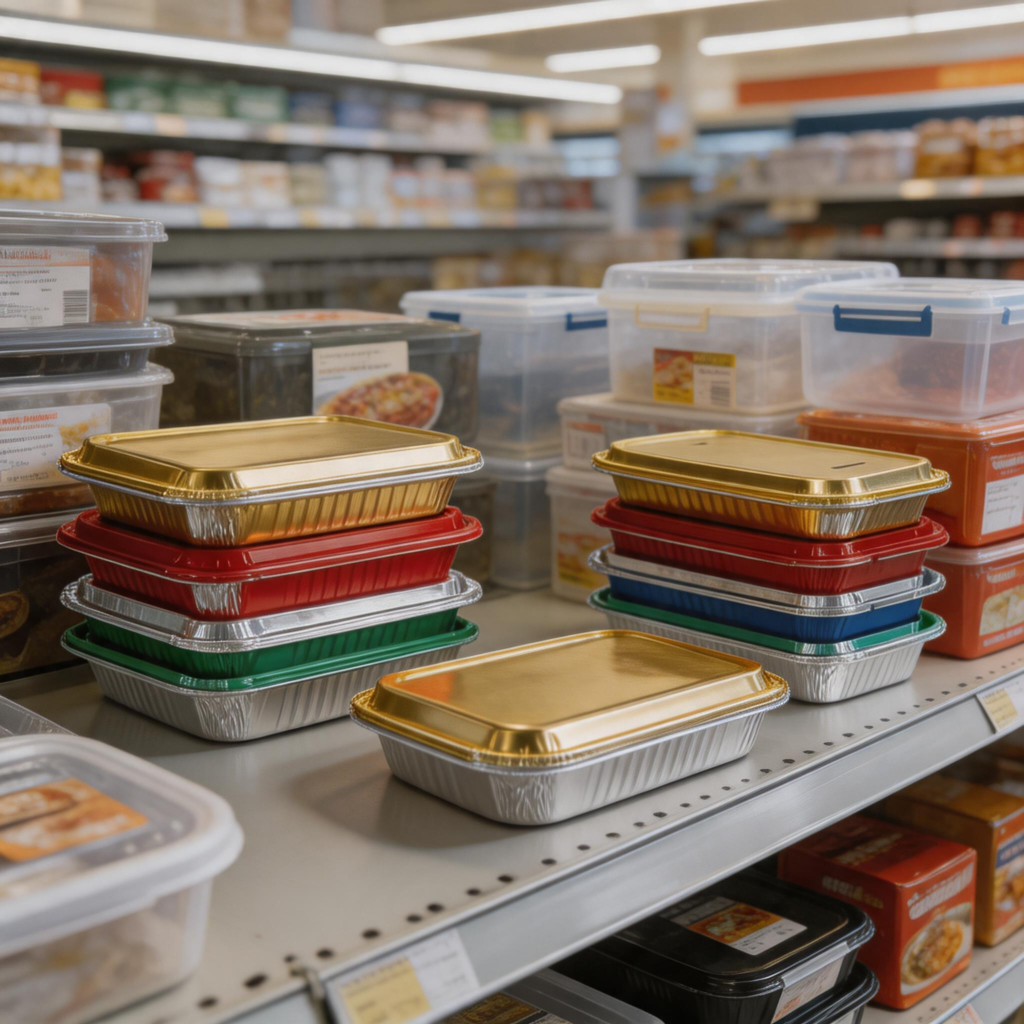
Heat Sealing Helps Protect Food Throughout the Journey
For airline catering, packaging is expected to do more than contain food. It also needs to help preserve freshness, reduce the risk of contamination, and withstand multiple handling stages before the meal reaches passengers.
This is why many airline meals are packed using heat-sealing systems.
When the tray, sealing film, and equipment are properly matched, heat sealing creates a secure closure that helps reduce leakage during transportation and minimizes exposure to air and external contaminants. For chilled meals, maintaining package integrity is especially important because products may remain in refrigerated storage for several hours before being loaded onto an aircraft.
However, sealing performance depends on more than the sealing film itself.
The flatness of the tray rim, dimensional consistency, sealing temperature, pressure, and dwell time all contribute to the final result. Even a well-designed lidding film cannot compensate for poor container consistency.
For manufacturers operating automated packaging lines, stable dimensions are often just as important as sealing strength.
Lightweight Design Doesn’t Mean Compromising Strength
Weight has always been an important consideration in aviation.
Although a single food tray weighs very little, commercial aircraft carry hundreds of meals on every flight. Over time, reducing unnecessary weight wherever possible contributes to overall operational efficiency.
That is why airline catering suppliers often look for packaging that balances lightweight construction with sufficient structural strength.
A well-designed aluminum foil tray should remain stable during stacking, transportation, and reheating without using more material than necessary. This balance is achieved through container geometry, rolled edge design, and manufacturing precision rather than relying only on thicker aluminum.
For buyers, focusing only on material thickness may overlook other factors that have a greater influence on real-world performance.
Compliance Is Essential for International Food Packaging
Airline catering often serves international routes, which means packaging may need to comply with different food-contact regulations depending on the destination market.
For many buyers, regulatory compliance is a standard part of supplier evaluation.
Common requirements may include compliance with FDA food-contact regulations for the U.S. market or Regulation (EC) No. 1935/2004 for materials intended to come into contact with food in the European Union. Some customers also request migration testing reports, material declarations, or third-party inspection documents from organizations such as SGS.
In addition to product compliance, many food manufacturers prefer suppliers that operate under recognized food safety and quality management systems, helping ensure greater consistency throughout production.
Preparing these documents before customer audits can simplify the purchasing process and build confidence between suppliers and buyers.
What Buyers Should Consider Before Choosing an Airline Tray Supplier
Price is always an important factor, but it is rarely the only factor that determines the success of a packaging project.
When evaluating potential suppliers, buyers may also want to consider:
- Whether the trays are compatible with existing heat-sealing equipment.
- Whether dimensions remain consistent across large production batches.
- Whether the containers can withstand stacking during transportation.
- Whether food-contact compliance documents are available.
- Whether the supplier has stable production capacity and reliable delivery schedules.
- Whether customization is available for different meal sizes or branding requirements.
Looking beyond the initial quotation often helps reduce operational risks after production begins.
The demands placed on airline food packaging continue to evolve as catering operations become more efficient and passenger expectations continue to rise.
Aluminum foil trays remain one of the most practical packaging solutions because they combine temperature resistance, efficient heat transfer, structural stability, and compatibility with modern heat-sealing systems.
For food manufacturers and airline catering companies, selecting the right tray is about much more than choosing a container. It is about ensuring reliable performance throughout preparation, storage, transportation, reheating, and final service.
Working with an experienced manufacturer that understands these operational requirements can help improve both packaging performance and long-term supply reliability.
About AIKOU
AIKOU has specialized in aluminum foil food packaging for more than 15 years, serving customers in food manufacturing, catering, retail, and packaging industries.
Our product portfolio includes airline meal trays, heat-sealable aluminum foil containers, smooth-wall containers, takeaway packaging, and customized aluminum packaging solutions. With GMP-managed production facilities and certifications including FSSC 22000, ISO 9001, HACCP, FDA, and SGS, we are committed to providing reliable packaging solutions that support food safety and consistent production quality.