Are Aluminum Foil Food Containers Suitable for Central Kitchens and Cold Chain Distribution?

Last Updated on يوليو 24, 2026 by لوكا
As food production becomes more centralized, packaging is no longer just about holding food. It has become an important part of the production process, influencing food safety, transportation efficiency, storage performance, and even the consumer’s dining experience.
Whether it’s ready meals in supermarkets, airline catering, meal delivery services, or institutional food programs, many of these products are prepared in central kitchens before being transported through refrigerated or frozen supply chains. This production model places much higher demands on food packaging than traditional restaurant operations.
Among the various packaging materials available today, aluminum foil food containers remain a common choice for many food manufacturers. They are lightweight, resistant to a wide range of temperatures, and compatible with many heat-sealing systems. But are they suitable for every central kitchen and every cold chain application?
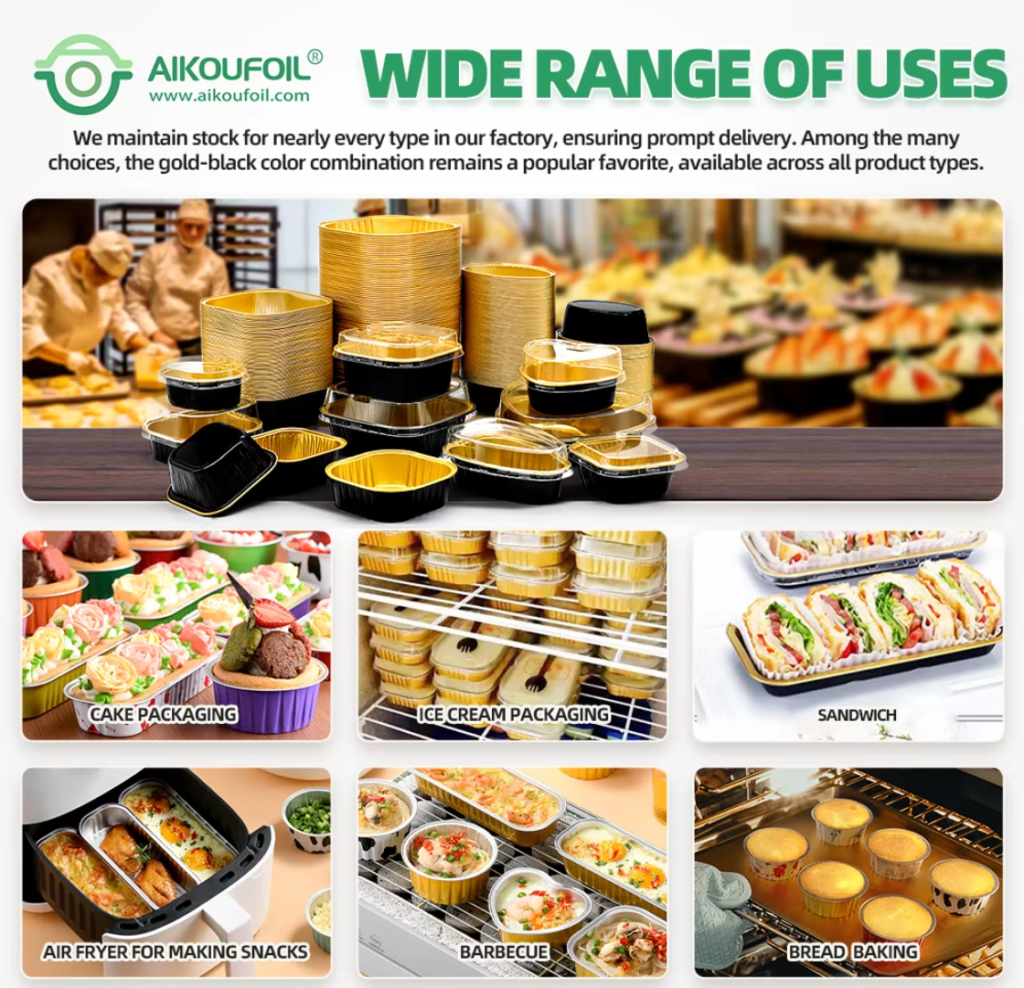
The short answer is that they are often an excellent option—but only when the container is designed for the intended application. Material thickness, structural strength, sealing performance, and manufacturing consistency all play an important role.
In this article, we’ll look at the practical requirements of central kitchens and cold chain distribution, explain why aluminum foil performs well in these environments, and discuss the factors buyers should evaluate before making a purchasing decision.
جدول المحتويات
Why Central Kitchens Demand More from Food Packaging
A restaurant preparing meals for immediate consumption and a central kitchen producing thousands of meals every day face completely different packaging challenges.
In a central kitchen, food is rarely served immediately after cooking. Instead, meals usually go through several processing stages before reaching the consumer. Depending on the product, the workflow may include cooking, filling, heat sealing, rapid cooling, refrigerated storage, cold chain transportation, retail display, and finally reheating.
Each stage creates additional stress on the packaging.
For example, freshly prepared food may still be hot when it is filled into the container. During rapid cooling, the packaging must withstand sudden temperature changes without deforming. While being stacked in refrigerated warehouses or transport vehicles, containers need enough structural strength to support the weight above them. Later, when consumers or catering operators reheat the meal, the container should maintain its shape and perform safely under elevated temperatures.
Packaging failures at any stage can interrupt production, increase food waste, or reduce customer satisfaction.
This is why purchasing decisions should not be based on price alone. A container that appears similar during sampling may perform very differently in large-scale production.
The Challenges of Cold Chain Distribution
Cold chain logistics has become an essential part of the modern food industry. According to the Food and Agriculture Organization of the United Nations (FAO), maintaining appropriate temperature control throughout storage and transportation is one of the most effective ways to preserve food quality and reduce food loss.
However, maintaining temperature is only one part of the challenge.
Packaging also needs to remain stable throughout the entire distribution process. Containers are often stacked on pallets, transported over long distances, moved between warehouses, and handled multiple times before reaching retailers or consumers.
These repeated operations create pressure, vibration, and occasional impact. If a container lacks sufficient rigidity, it may deform during transportation. Even minor deformation can affect sealing integrity, product appearance, or stacking stability.
For food manufacturers, these seemingly small issues can translate into higher return rates, additional labor costs, and reduced production efficiency.
That’s why many experienced buyers evaluate packaging as part of the overall logistics system rather than focusing only on the container itself.
Why Aluminum Foil Performs Well Across Different Temperatures
One of aluminum’s biggest advantages is its ability to perform across a wide temperature range.
Unlike many packaging materials that are designed primarily for either refrigeration or heating, aluminum foil containers can often be used throughout multiple stages of food preparation and distribution. Depending on the specific product design, they are commonly used for refrigerated storage, frozen storage, oven heating, and steam heating without requiring food to be transferred into another container.
This “cook, store, transport, and reheat” capability helps simplify operations while reducing handling steps.
Another important advantage is aluminum’s excellent thermal conductivity.
Pure aluminum has a thermal conductivity of approximately 205 W/m·K, significantly higher than most food-grade plastics. While actual heating performance depends on food composition and equipment settings, aluminum generally allows heat to spread more evenly throughout the container, which can contribute to more consistent reheating.
For central kitchens serving schools, hospitals, airlines, or large catering operations, this consistency is often just as valuable as production efficiency.
Manufacturer’s Insight
At AIKOU, we’ve been manufacturing aluminum foil food packaging for more than 15 years, supplying products for a wide range of food service applications.
One observation we’ve made over the years is that buyers often focus first on aluminum thickness. Thickness is certainly important, but it is rarely the only factor that determines performance.
In real production environments, container design, rolled edge quality, dimensional consistency, and compatibility with heat-sealing equipment can have an equally significant impact. A well-designed container with stable manufacturing quality often performs better than a heavier container that lacks production consistency.
For companies operating automated packaging lines, evaluating the entire packaging system—not just the container specification—is usually the better long-term approach.
Heat Sealing Performance Is Just as Important as the Container
For many ready meals, the aluminum foil container is only one part of the packaging system. The sealing film is equally important because it helps protect the food from external contamination, reduces moisture loss, and can extend shelf life when used under appropriate packaging conditions.
However, achieving a reliable seal depends on much more than selecting a suitable film.
The flatness of the container rim, dimensional consistency, sealing temperature, pressure, dwell time, and the compatibility between the container and the lidding film all influence sealing quality. Even small variations can affect automated production, especially when thousands of containers are sealed every hour.
For this reason, many food manufacturers conduct sealing trials before placing large production orders. Testing under actual production conditions is often more valuable than relying solely on product specifications or laboratory data.
Food Safety Should Never Be an Afterthought
Food packaging comes into direct contact with food, so compliance is not simply a regulatory requirement—it is also an important part of brand reputation.
Depending on the destination market, buyers may ask suppliers to provide documentation related to food-contact materials, migration testing, or manufacturing quality systems.
For example, companies exporting to the European market often pay attention to Regulation (EC) No. 1935/2004, which sets out the general requirements for materials intended to come into contact with food. In the United States, food-contact materials are regulated by the U.S. Food and Drug Administration (FDA).
Many international buyers also request third-party testing reports from organizations such as SGS, along with certifications related to quality management or food safety systems.
Preparing these documents in advance can help simplify supplier approval and reduce delays during customer audits or customs clearance.
Transportation Strength Is About More Than Thickness
One of the most common questions buyers ask is, “How thick is the aluminum?”
Thickness is certainly important, but it does not tell the whole story.
A container’s resistance to deformation depends on several factors, including its shape, rib design, rolled edge structure, and manufacturing precision. Two containers with the same material thickness may perform very differently when stacked or transported.
This is particularly important in cold chain logistics, where products may remain stacked for extended periods inside refrigerated warehouses or shipping containers.
Selecting a stronger structural design can help reduce deformation during transportation, improve stacking stability, and minimize product damage.
Common Mistakes Buyers Make When Choosing Aluminum Foil Containers
Many purchasing decisions are made under tight budgets and production schedules, so comparing prices is understandable. However, focusing only on unit cost can sometimes create higher costs later in production.
Some of the most common purchasing mistakes include:
- Choosing containers based only on thickness while overlooking structural design.
- Skipping compatibility tests with existing heat-sealing equipment.
- Ignoring dimensional consistency for automated production lines.
- Failing to verify food-contact compliance before importing products.
- Purchasing based on samples without evaluating mass production quality.
Looking at the entire production process often leads to better purchasing decisions than comparing specifications alone.
Choosing the Right Aluminum Foil Container
Every food product has different packaging requirements.
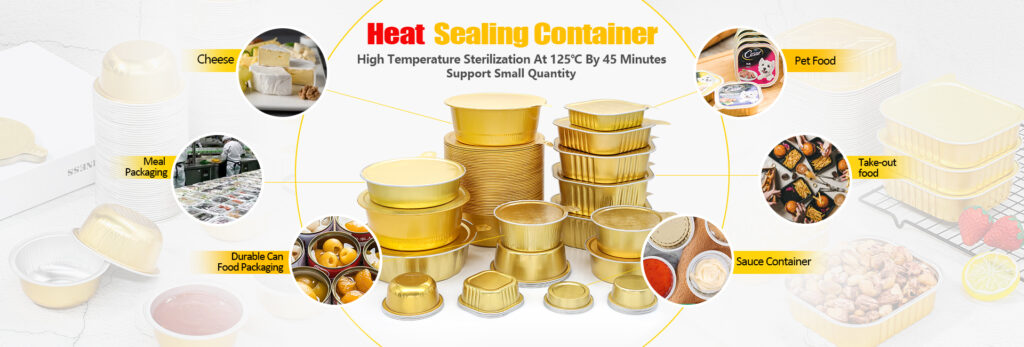
A chilled ready meal, a frozen entrée, an airline meal, and a freshly prepared takeaway may all use aluminum foil containers, but the ideal specifications are unlikely to be identical.
Before selecting a supplier, buyers should consider questions such as:
- What temperature range will the container experience?
- Will it be heat sealed?
- Will it be stacked during storage or transportation?
- Is the packaging line fully automated?
- Which food-contact regulations apply in the destination market?
Answering these questions early can help narrow down the most suitable container design and reduce costly changes after production begins.
خاتمة
Aluminum foil food containers have become an important packaging solution for central kitchens and cold chain distribution, not because they fit every application, but because they offer a practical combination of temperature resistance, structural stability, heat-sealing compatibility, and food safety compliance.
The right container should support the entire food production process—from filling and sealing to storage, transportation, and reheating—not simply perform well in one stage.
For buyers, choosing a supplier with consistent manufacturing capabilities and experience in food packaging is often just as important as selecting the right product specification.
About AIKOU
AIKOU has specialized in aluminum foil food packaging manufacturing for more than 15 years. Our product range includes smooth-wall aluminum foil containers, heat-sealable containers, airline meal trays, takeaway containers, and customized aluminum packaging solutions.
Our production facilities operate under GMP management practices and are certified to FSSC 22000, ISO 9001, HACCP, FDA, and SGS standards. We work with food manufacturers, distributors, and private-label brands worldwide, providing packaging solutions designed for consistent quality and reliable performance.