

طفرة تغليف الألمنيوم في كوريا الجنوبية: لماذا ارتفع تفضيل المستهلكين بنسبة 34.71 ضعفًا في عام 2026 وماذا يعني ذلك للمصدرين؟

آخر تحديث في 10 أبريل، 2026 بواسطة لوكا
جدول المحتويات
مقدمة
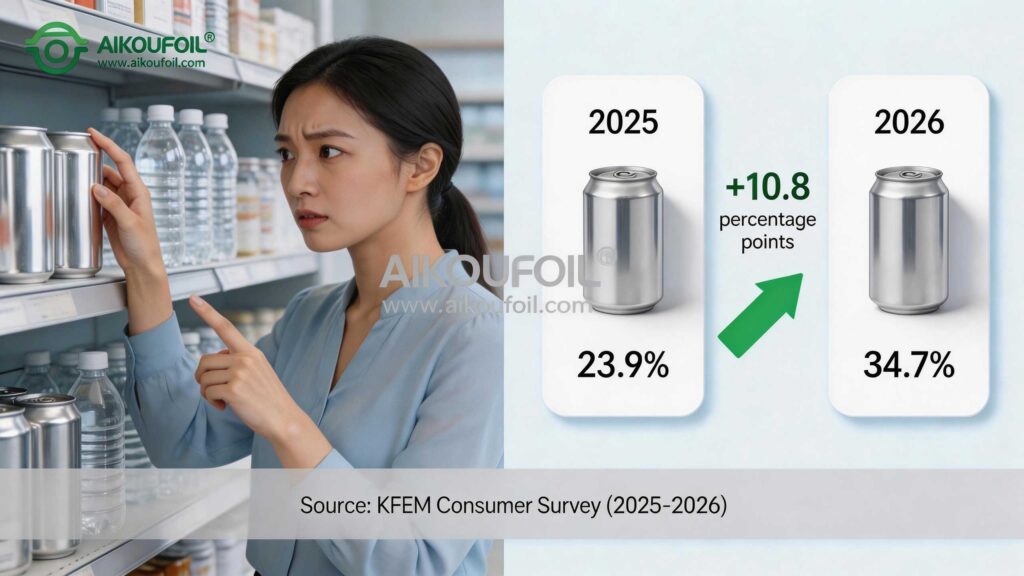
On Global Recycling Day, March 18, 2026, the Seoul Korea Federation for Environmental Movements (KFEM) released nationwide survey findings that sent ripples through the packaging industry: the share of South Korean consumers favoring aluminum beverage packaging had surged to 34.7 per cent in 2026, up from just 23.9 per cent a year earlier—a dramatic increase of 10.8 percentage points within a single year. While plastic bottles still held the top spot at 43.4 per cent, the trajectory is unmistakable: South Korean consumers are shifting away from plastic and toward materials perceived as more sustainable.
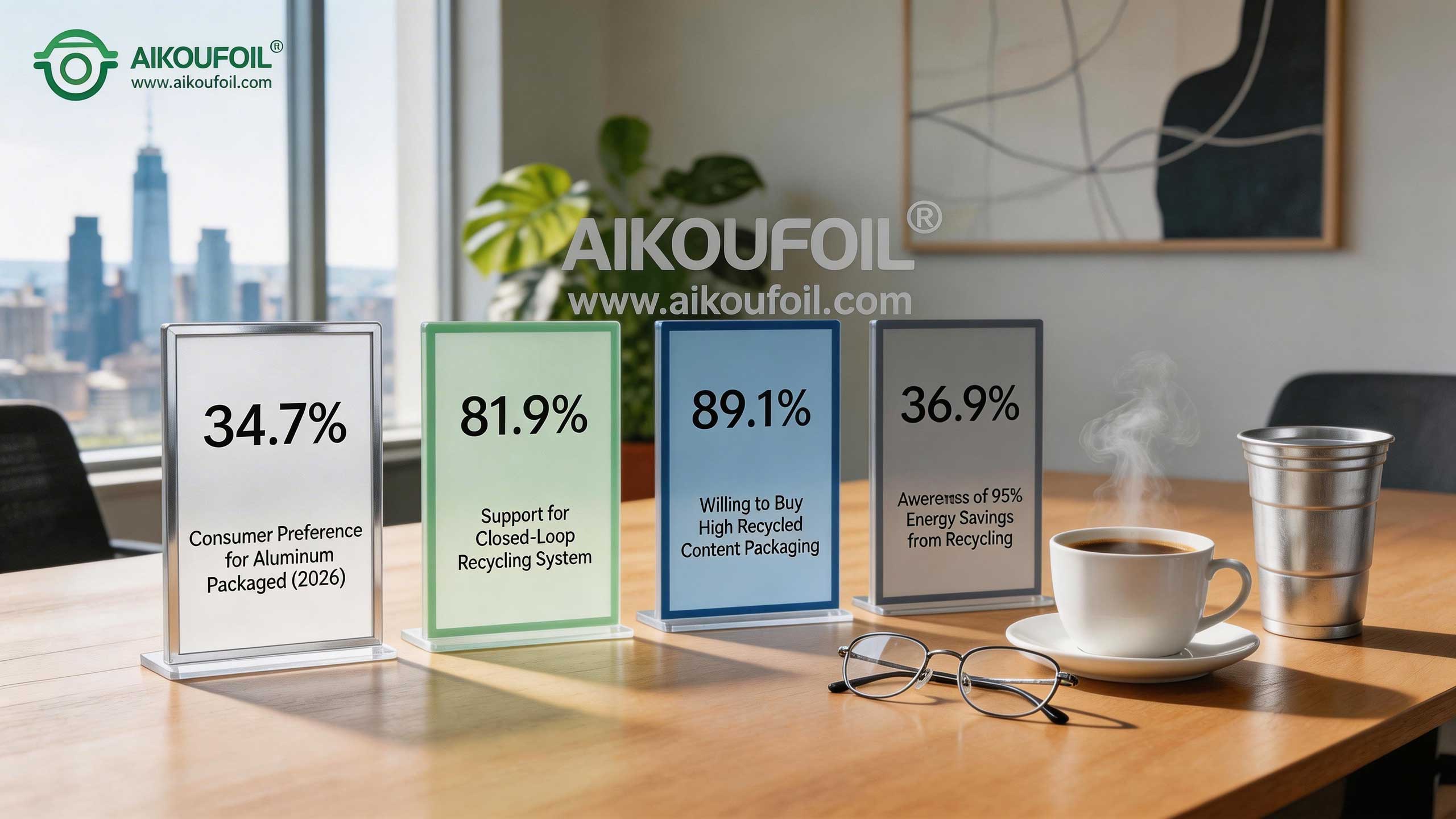
This shift in the South Korea aluminum packaging market signals more than a passing trend. For exporters of aluminum foil products.This shift signals more than a passing trend. For exporters of aluminum foil products—whether heat-sealing containers, baking cups, coffee capsules, airline food containers, or colored foil pans—the Korean market is awakening to the value of aluminum packaging at an unprecedented pace. Yet the survey also revealed a critical insight: while Korean consumers increasingly prefer aluminum, their understanding of aluminum‘s unique environmental advantages remains surprisingly limited. Only 36.9 per cent of respondents knew that recycling aluminum saves approximately 95 per cent of the energy required for primary production. This gap between preference and awareness represents a powerful opportunity for savvy exporters who know how to tell the right story.
The Numbers That Matter: Understanding Korea‘s Packaging Revolution
The KFEM survey, conducted among 1,011 adults nationwide, paints a detailed picture of a market in transition. Preference for aluminum cans rose sharply over the past year, reflecting growing consumer demand for recyclable packaging solutions. More than three-quarters of respondents (77.2 per cent) said closed-loop recycling systems are important for tackling climate change, and 81.9 per cent agreed with the concept of “closed-loop recycling”—where materials are reused to make the same products, not downcycled into lower-grade items.
Perhaps most telling for exporters: 75.5 per cent of Korean consumers said they would choose recyclable packaging in future purchases, and 78.3 per cent intended to properly separate aluminum cans for recycling. This is not passive interest—it is active consumer demand that brands and packaging suppliers cannot afford to ignore.
However, behavioral intentions do not always translate into actions. Respondents identified several structural barriers to recycling: lack of space for sorting and storing recyclables (22.3 per cent), confusion over separation methods (14.0 per cent), and doubts about whether recycling is properly carried out (8.5 per cent). For exporters, this means that while demand for aluminum packaging is growing, the supporting infrastructure and consumer education still lag—creating both a challenge and an opportunity to lead the market with clear, credible communication.
Why Aluminum? Unpacking the Drivers Behind Korea‘s Shifting Preferences
Several interconnected factors are driving Korean consumers toward aluminum packaging. Understanding these drivers is essential for any exporter seeking to capture this growing market.
Policy Momentum: Korea’s Aggressive Plastic Reduction Agenda
South Korea‘s government has made plastic reduction a national priority. In December 2025, the Ministry of Climate, Energy and Environment released a comprehensive “Plastic Reduction Comprehensive Plan,” aiming to cut plastic waste emissions by more than 30 per cent by 2030. Key measures include a “separate cup fee system” starting in 2026, where beverage receipts will itemize disposable cup costs to raise consumer awareness, alongside restrictions on straws and excessive packaging. The plan also mandates that large manufacturers use 10 per cent recycled materials in 2026, increasing to 30 per cent by 2030.
Environmental Awareness Rising Among Korean Consumers
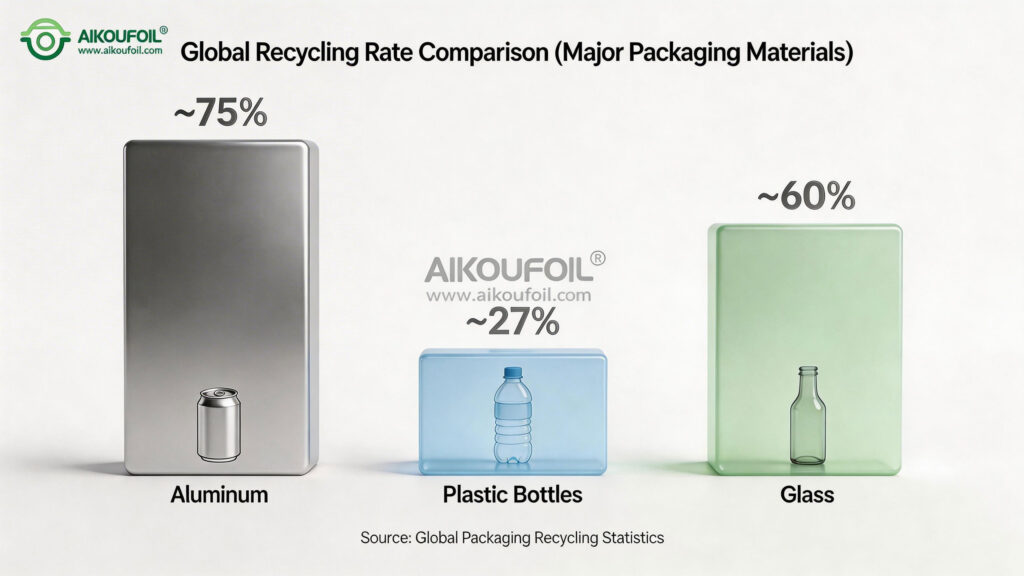
Korean consumers are becoming more sophisticated in their understanding of environmental issues. Nearly 8 out of 10 respondents recognized the importance of recycling materials without compromising their quality. Globally, aluminum is already the most recycled beverage packaging material, with recycling rates reaching approximately 75 per cent in 2023—significantly higher than plastic bottles and glass.
The Practical Advantages of Aluminum Foil Packaging
Aluminum containers are oven-safe, freezer-safe, and microwave-safe—versatility that plastic alternatives cannot match. They provide superior barrier protection against moisture, oxygen, and light, extending product shelf life. They are lightweight, stackable, and cost-effective to transport.
The Awareness Gap: Korea’s Untapped Opportunity for Exporters
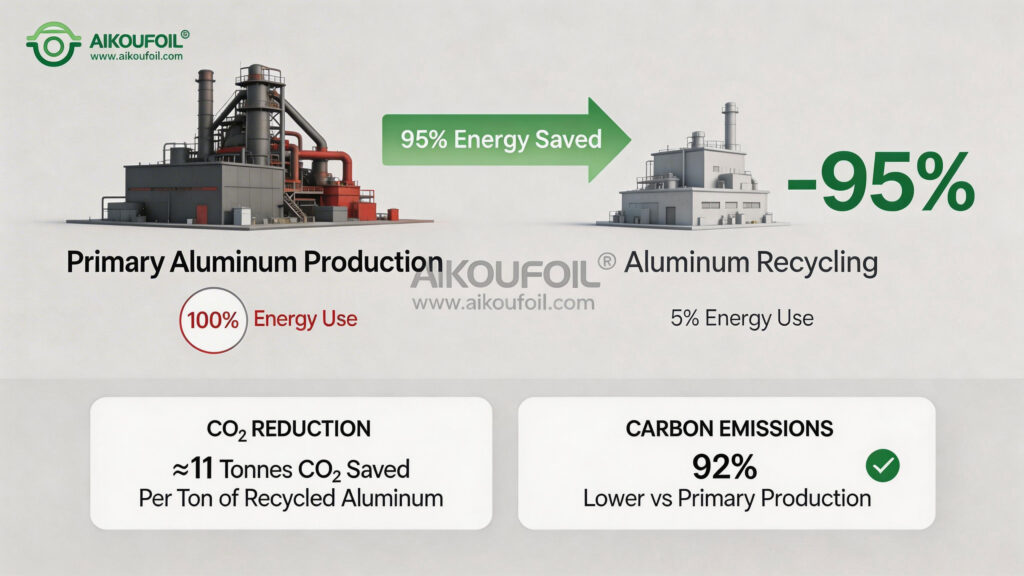
Despite rising preference for aluminum, the KFEM survey revealed a significant disconnect between consumer intentions and actual knowledge. Only 36.9 per cent of respondents said they knew that recycling aluminum cans into new cans saves approximately 95 per cent of the energy required to produce new material. Just over half (54.0 per cent) correctly identified that aluminum cans can be recycled back into the same product.
In last year‘s Novelis Korea survey, 57.4 per cent of respondents were unaware that aluminum cans can be recycled infinitely without loss of quality. However, once informed about aluminum’s infinite recyclability, 84.1 per cent of participants indicated a strong willingness to opt for beverages packaged in aluminum cans instead of plastic, glass bottles, or paper cartons. This finding is crucial: consumer education works.
This gap between preference and awareness represents a significant market opportunity for aluminum packaging exporters. Korean consumers already want aluminum—but they do not fully understand why it is superior. Exporters who can effectively communicate aluminum‘s unique sustainability advantages will be positioned to capture premium pricing and build lasting brand loyalty.
Policy Implications: What Korean Consumers Want from Government and Brands
Korean consumers are not waiting passively for change. The KFEM survey found overwhelming support for policy measures to strengthen recycling systems. Nearly 80 per cent of respondents backed installing can collection machines in supermarkets or community centres, offering incentives such as cash or reward points for returns. About 73 per cent supported mandatory labelling of recycled material content in products.
In last year‘s survey, 79.3 per cent supported a deposit system for cans, while 89.1 per cent said they were willing to buy aluminum can products labeled as containing more than 80 per cent recycled aluminum. These numbers reveal a market that is not just accepting of recycled-content aluminum but actively demanding it.
For exporters, this means that highlighting recycled content—and certifying it with credible third-party verification—can be a powerful differentiator. Korean consumers are willing to pay for products that use high percentages of recycled aluminum, but they need transparent labeling to make informed choices.
Market Projections: A Growth Trajectory That Demands Attention
The data points to sustained growth in South Korea‘s aluminum packaging market. According to Grand View Research, the South Korea metal cans market generated USD 732.6 million in 2025 and is expected to reach USD 1,135.9 million by 2033, growing at a compound annual growth rate (CAGR) of 5.7 per cent from 2026 to 2033. Notably, aluminum was the largest revenue-generating material segment in 2025 and is also the fastest-growing segment.
The broader South Korea aluminum market is expanding even more rapidly, projected to grow from USD 13.50 billion in 2024 to USD 19.71 billion by 2030, at a CAGR of 6.03 per cent. Packaging is a key end-user segment driving this growth, alongside automotive, electronics, and construction applications.
For aluminum foil exporters, these projections signal a market in expansion mode—one where demand for sustainable packaging solutions is rising in lockstep with regulatory pressure and consumer expectations.
How Exporters Can Capture the Korean Opportunity: A Strategic Roadmap
For the South Korea aluminum packaging market, the convergence of rising consumer preference, supportive policy, and robust market growth creates a clear window of opportunity for aluminum foil exporters. Here is how to position your products for success in the Korean market.
1. Tell the Energy Story—95% Less Carbon, 95% of Consumers Don‘t Know
Make the 95 per cent energy-saving statistic front and center in your Korean market communications. The International Aluminium Institute confirms that recycling aluminum saves 95% of the energy required for primary production, as well as the associated greenhouse gas emissions. Include it in product descriptions, packaging inserts, B2B sales materials, and digital content.
2. Highlight Recycled Content—Korean Consumers Are Asking for It
Nearly 9 out of 10 Korean consumers (89.1 per cent) said they would purchase aluminum products labeled as containing more than 80 per cent recycled aluminum. Use certified eco-labels and clear packaging claims.
3. Educate Through Digital Channels—Where Korean Buyers Are Searching
Create SEO-optimized articles, infographics, and videos that answer Korean consumers’ specific questions about aluminum foil recycling. Korean B2B buyers actively search for sustainable packaging solutions online, and well-optimized content can capture this demand.
4. Align Product Design with Korean Recycling Infrastructure
Korea operates an Extended Producer Responsibility (EPR) system that has been expanded in 2026 to cover more product categories. Design your aluminum foil containers with recyclability in mind. Avoid multi-material laminates. Use mono-material aluminum construction where possible.
5. Participate in Korea‘s Packaging Trade Shows and B2B Platforms
Korea Pack 2026 and similar events provide direct access to Korean buyers. Online B2B platforms such as Global Sources and Gobizkorea actively facilitate connections between international aluminum foil suppliers and Korean buyers. Ensure your website is optimized for Korean-language search terms.
6. Tailor Your Product Positioning to Specific Market Segments
Position your Heat Sealing Container Series for Korea’s ready-to-eat meal market, Foil Baking Cups for the bakery culture, Empty Coffee Capsules for Korea‘s high coffee consumption, and Airline Food Containers for Korean airlines’ ESG targets.
Looking Ahead: The Future of Aluminum Packaging in Korea
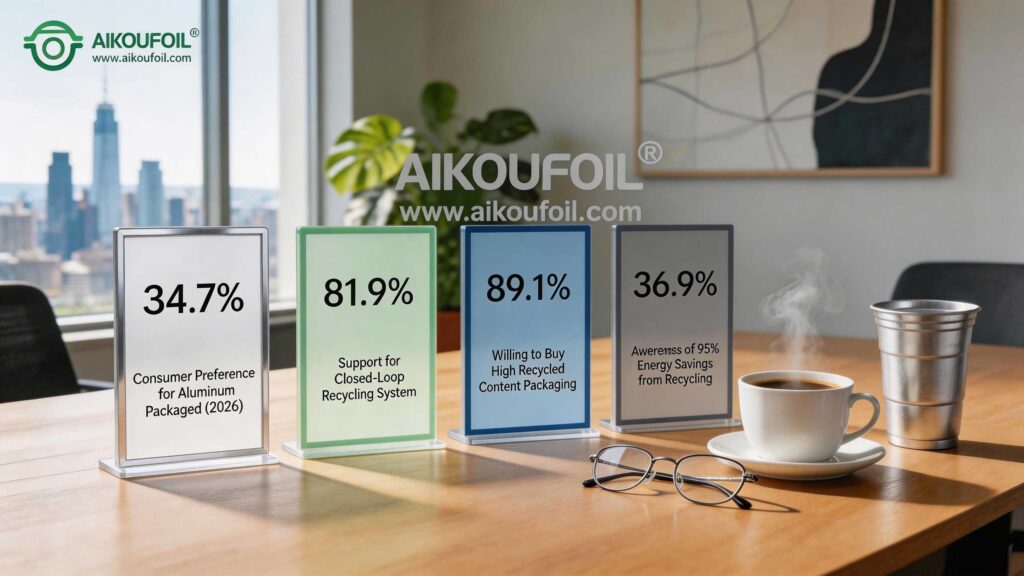
The KFEM survey data signals a fundamental shift in Korean consumer attitudes toward packaging. Preference for aluminum surged 10.8 percentage points in one year. More than 8 in 10 consumers support closed-loop recycling. Nearly 9 in 10 would buy high-recycled-content aluminum products. Yet fewer than 4 in 10 understand aluminum‘s 95 per cent energy-saving advantage.
This gap is where opportunity lives. For exporters willing to invest in consumer education, transparent certification, and product design aligned with Korean recycling infrastructure, the Korean market offers a rare combination of growing demand, favorable policy, and an audience primed for the right message.
The shift from plastic to aluminum in the South Korea aluminum packaging market is not a hypothetical future trend—it is happening now in South Korea, one of Asia’s most influential consumer markets. Exporters who act on this insight today will be positioned as preferred suppliers for Korean brands navigating the transition to sustainable packaging.
As Lee Dong-i, secretary-general of the Seoul KFEM, noted: “The results show that providing accurate information about aluminum‘s environmental benefits can influence consumer choices and participation in recycling.” For aluminum foil exporters, the path forward is clear: provide that information, deliver the quality, and capture the opportunity.








I love how South Korea is not only focusing on sustainability but also on educating consumers about the benefits of aluminum over plastic. It’s crucial for markets to bridge this awareness gap to fully take advantage of the shift.